
Key takeaways
- Compare surface irrigation pumps for outdoor water supply on acreage, with flow, lift, pressure and priming figures for ponds, tanks and long pipe runs today.
What's inside
As an Amazon Associate I earn from qualifying purchases. This post may contain affiliate links at no extra cost to you.
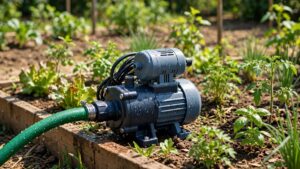
Supplying water outdoors across acreage is a different job from watering a town garden. The source is often a pond, a creek, a storage tank or a shallow well sitting well below the fields, the pipe runs are long, and a single zone may need to feed several sprinkler heads at once for hours. A surface pump, mounted above the water and drawing through a suction line, is the standard answer, and the best surface irrigation pumps for outdoor water supply on acreage are the ones with the flow, lift and priming depth to handle that work season after season. This guide compares seven self-priming sprinkler pumps from 1 to 2 HP, in cast iron and thermoplastic housings, using only the performance figures their makers and retailers publish. It also explains how to read those figures, because the difference between a maximum flow and a flow at working lift is where most acreage systems succeed or disappoint.
Quick verdict
The Red Lion RL-SPRK200 is the strongest choice for large zones, with 76 GPM and 25 ft priming from a cast iron body. Its RL-SPRK150 sibling is the sweet spot for most properties, adding dual-voltage flexibility at 71 GPM, while the RL-SPRK100 suits smaller acreage. Among the Flotec and Everbilt options, the FP5242 publishes the most useful working figures, the FP5182 brings 2 HP output in a rust-proof housing, the Everbilt offers a strong lift and flow balance through a national retailer, and the FP5172 is the value pick at 67 GPM.
| Product | Key spec | Best for |
|---|---|---|
| Red Lion RL-SPRK200 Self-Priming Sprinkler Pump | 2 HP; 76 GPM max; 49 psi max; primes to 25 ft; cast iron | Large acreage zones running several sprinkler heads at once |
| Everbilt 1-1/2 HP Cast Iron Lawn Sprinkler Pump EFLS15CI-HD | 1.5 HP; up to 4,020 GPH; lift up to 20 ft; 115/230 V switch | Drawing from a pond or tank on mid-size acreage |
| Flotec FP5242 1.5 HP Cast Iron Sprinkler Pump | 1.5 HP cast iron; 55 GPM max; 42 GPM at 10 ft lift and 30 psi | Buyers who want published performance at working lift and pressure |
| Red Lion RL-SPRK150 Self-Priming Sprinkler Pump | 1.5 HP; 71 GPM max; 44 psi; primes to 25 ft; cast iron | Acreage zones that need near-flagship flow on a dual-voltage supply |
| Flotec FP5182 Thermoplastic Sprinkler Pump | 2 HP; 69 GPM; self-priming; thermoplastic; 2 in ports | Coastal or damp sites where a rust-proof housing matters |
| Red Lion RL-SPRK100 Self-Priming Sprinkler Pump | 1 HP; 63 GPM max; 45 psi; primes to 25 ft; cast iron | Smaller acreage, hobby farms and single-zone sprinkler layouts |
| Flotec FP5172 Sprinkler Pump | 1.5 HP; 67 GPM; self-priming; thermoplastic; 115/230 V | Acreage on a budget that still needs full-size sprinkler flow |
How we chose
Every pump here is a true surface pump: a self-priming centrifugal or jet sprinkler pump designed to sit above its source and draw through a suction line, which is the configuration acreage supply requires. Submersible and small utility pumps were excluded, however strong their figures, because they solve a different problem. Each listing had to publish flow, and preferably a lift, pressure or priming figure, so output could be compared honestly; pumps are ordered by how their published figures suit large outdoor zones, not by price or ratings. Housing material, voltage options and port sizes were recorded from the product pages because they decide installation practicality on rural properties. Where a maker publishes a working performance point as well as a maximum, that point is quoted and explained.
Red Lion RL-SPRK200 Self-Priming Sprinkler Pump
- Power: 2 HP
- Maximum flow: 76 GPM
- Maximum pressure: 49 psi
- Priming: self-priming to 25 ft after initial fill
- Voltage: 230 V
- Ports: 2 in intake, 1.5 in discharge
- Housing: cast iron
Acreage watering is a volume problem before it is anything else. Long pipe runs, several heads open at once and a source that may sit well below the pump all eat flow and pressure, and an undersized pump answers with weak, shrinking patterns at the far end of the property. The RL-SPRK200 is the largest pump in Red Lion's sprinkler line, with a listed maximum of 76 GPM and pressure up to 49 psi, which is enough headroom to feed generous zones without running the motor at its limit all season. The cast iron body suits an outdoor or pump-house installation that stays in place for years, and the 2 in intake matches the suction line sizing that high-flow work demands, since a starved intake is the most common cause of cavitation noise and lost prime. Self-priming to 25 ft after the initial fill means the pump recovers on its own after routine interruptions, a real benefit on a large property where the pump may sit far from the house. For acreage with a pond, well or tank source, this is the anchor pump of the list.
Pros:
- Highest flow on this list for big multi-head zones
- Cast iron body suits a permanent outdoor installation
- Self-priming to 25 ft after the first fill
Cons:
- 230 V supply only, so wiring must suit it
- Oversized for small plots and short pipe runs
Everbilt 1-1/2 HP Cast Iron Lawn Sprinkler Pump EFLS15CI-HD
- Power: 1.5 HP
- Housing: cast iron
- Priming: self-primes after initial fill
- Lift: up to 20 ft
- Flow: up to 4,020 GPH as listed
- Voltage: 115/230 V change switch
- Warranty: 1 year as listed
The Everbilt EFLS15CI-HD sits in the productive middle of this list: a 1.5 HP cast iron sprinkler pump rated up to 4,020 GPH, which works out at about 67 GPM, drawn from sources up to 20 ft below the pump. That combination covers the common acreage arrangement of a pond, creek or storage tank feeding sprinkler zones for pasture edges, orchards and large garden ground. The dual-voltage change switch is a practical advantage on rural properties, where the available supply at an outbuilding may be 115 V today and upgraded later; the pump adapts with a switch rather than a replacement. Cast iron construction handles the knocks of a working pump house and the unit self-primes after its initial fill, so a power cut or a drained line does not turn into a long manual restart at the far end of the property. Retail availability through a national chain also means a like-for-like replacement or parts conversation is straightforward years from now.
Pros:
- Strong flow figure with a 20 ft lift for pond and tank sources
- Dual-voltage switch suits outbuilding supplies
- Cast iron housing and self-priming after initial fill
Cons:
- 1 year warranty is shorter than some rivals
- Lift rating is lower than the 25 ft Red Lion models
Flotec FP5242 1.5 HP Cast Iron Sprinkler Pump
- Power: 1.5 HP
- Housing: cast iron
- Maximum flow: 55 GPM
- Performance point: 42 GPM at 10 ft lift and 30 psi
- Maximum lift: 25 ft
- Maximum pressure: 47 psi
- Voltage: 115/230 V; 19.2 A / 9.6 A as listed
- Priming: self-priming after initial fill; drain port fitted
Most pump listings quote a best-case flow at almost no lift, which tells an acreage owner very little. The FP5242 listing is more useful than most because it publishes a working point: 42 GPM at 10 ft lift and 30 psi. That is the sort of figure a sprinkler zone is actually designed around, and it shows a pump that still delivers a strong stream while lifting from a real source and pushing against real pressure. The cast iron body, 25 ft maximum lift and dual-voltage motor place it squarely in the same class as the other 1.5 HP pumps here, while the drain port is a small detail with real value in cold districts, making the end-of-season drain-down a quick job instead of a dismantling exercise. Self-priming after the initial fill keeps restarts simple. For a buyer comparing pumps on honest working figures rather than headline maxima, this Flotec is the one that shows its working.
Pros:
- Published flow at real lift and pressure, not just a maximum
- Drain port simplifies winter drain-down
- Cast iron body with 25 ft maximum lift
Cons:
- Headline maximum flow is lower than some 1.5 HP rivals
- Amperage at 115 V needs a suitably rated circuit
Red Lion RL-SPRK150 Self-Priming Sprinkler Pump
- Power: 1.5 HP
- Maximum flow: 71 GPM
- Maximum pressure: 44 psi as listed
- Priming: self-priming to 25 ft
- Voltage: 115/230 V
- Ports: 2 in intake, 1.5 in discharge
- Housing: cast iron
The RL-SPRK150 gives up little to its 2 HP sibling. Its listed 71 GPM maximum is only a few gallons behind the flagship, and it keeps the same 25 ft self-priming depth, the same cast iron construction and the same generous 2 in intake and 1.5 in discharge sizing. What it adds is voltage flexibility: the dual-voltage motor runs on 115 V or 230 V, which matters on acreage where the pump house or barn supply may not offer 230 V at all. For many properties this is the sweet spot of the range, strong enough to run several rotor heads per zone across long pipe runs, without the wiring demands of the bigger unit. Pressure tops out a little lower than the RL-SPRK200, so very long uphill runs deserve a careful calculation, but for level or gently sloping ground the difference rarely shows at the sprinkler. It is the pump most acreage owners should price first, stepping up only if zone math says the extra flow is genuinely needed.
Pros:
- Near-flagship flow with dual-voltage flexibility
- 25 ft self-priming depth and cast iron body
- Full-size 2 in intake avoids starving the pump
Cons:
- Maximum pressure slightly below the 2 HP model
- Still a heavy, permanent-installation unit
Flotec FP5182 Thermoplastic Sprinkler Pump
- Power: 2 HP
- Maximum flow: 69 GPM
- Housing: thermoplastic
- Priming: self-priming after initial fill
- Voltage: 115/230 V
- Ports: 2 in suction and discharge
The FP5182 matches the biggest pumps here on power and flow, 2 HP and a listed 69 GPM, but builds the body from thermoplastic instead of cast iron. That choice suits a particular kind of acreage installation: the damp pump house, the coastal property with salt in the air, or the source-side shelter where condensation keeps metal wet for months. A thermoplastic housing cannot rust, and it shrugs off the surface corrosion that slowly eats iron fittings and fasteners in those conditions. The 2 in suction and discharge ports keep friction losses low on long runs, and the pump self-primes after its initial fill like the rest of the Flotec sprinkler line. It asks for a little more protection from knocks and from direct sun than an iron pump, and it should be mounted on a firm, level base away from strimmer range. Where corrosion is the main enemy rather than impact, it offers flagship-class output without a metal case to maintain.
Pros:
- 2 HP output with a housing that cannot rust
- Full 2 in ports keep long-run friction losses low
- Self-priming after the initial fill
Cons:
- Thermoplastic needs guarding against knocks and sun
- Performance chart shared with the series needs careful reading
Red Lion RL-SPRK100 Self-Priming Sprinkler Pump
- Power: 1 HP
- Maximum flow: 63 GPM
- Maximum pressure: 45 psi as listed
- Priming: self-priming to 25 ft
- Voltage: 115/230 V
- Ports: 2 in intake, 1.5 in discharge as listed for the range
- Housing: cast iron
Not all acreage is vast. A two-acre smallholding with one sprinkler zone for the orchard and one for the garden ground does not need a 2 HP pump running far below its design point. The RL-SPRK100 is the 1 HP entry in the same cast iron, self-priming family, and its listed 63 GPM maximum is still a large volume of water, more than many small properties can supply or use at once. It keeps the 25 ft priming depth, so it draws from the same ponds and tanks as its bigger siblings, and the dual-voltage motor suits outbuilding supplies. Running a correctly sized pump near its intended duty is kinder to the motor and the electricity bill than oversizing, and start-up current is lower, which matters on long rural cable runs. Gardeners stepping up from a portable pump to a first permanent installation will find this the natural landing point: proper sprinkler-pump construction and figures, at the gentlest scale in the range.
Pros:
- Proper cast iron sprinkler pump at a gentler scale
- 63 GPM maximum still serves generous single zones
- Lower start-up demand suits long rural cable runs
Cons:
- Limited headroom if zones are added later
- 1 HP output suits smaller properties only
Flotec FP5172 Sprinkler Pump
- Power: 1.5 HP
- Maximum flow: 67 GPM
- Housing: thermoplastic, fiberglass reinforced as listed for the series
- Priming: self-priming after initial fill
- Voltage: 115/230 V
- Ports: 1.5 in as listed for the series
- Performance: charted at depths to water of 20 ft or less
The FP5172 is the value route to full-size sprinkler performance. Its listed 67 GPM maximum matches or beats several cast iron rivals, from a 1.5 HP motor, and the fiberglass reinforced thermoplastic housing keeps both weight and corrosion worries down. The series performance figures are charted at depths to water of 20 ft or less, which honestly describes most pond, tank and shallow well installations on acreage, and the pump self-primes after the initial fill for simple restarts. Dual-voltage wiring suits the mixed supplies found in barns and outbuildings. Like its FP5182 sibling it deserves a sheltered, level mounting and protection from accidental knocks, and in return it delivers zone-filling flow without the cost or the rust maintenance of an iron body. For a large garden, a young orchard or pasture-edge watering where the budget also has to cover pipe, heads and fittings, this is a sensible place to put the money that remains after the hydraulics are right.
Pros:
- 67 GPM maximum from a corrosion-proof housing
- Dual-voltage motor suits outbuilding supplies
- Lighter body is easier to position and service
Cons:
- Charted for depths to water of 20 ft or less
- Housing needs shelter from knocks and weather extremes
Buying guide
A pump is the heart of an acreage water system, and the rest of the system, pipe sizes, zone design and source, has to be planned around what the pump can truly deliver. Work through these points before choosing between the models above.
Read flow figures with their conditions attached
A maximum flow figure is measured at minimal lift and pressure, conditions that never occur on real acreage. What matters is the flow at your lift and your working pressure, which is why a published working point, like the FP5242 figure of 42 GPM at 10 ft lift and 30 psi, is worth more than a bigger headline number. Sketch your system: height from water surface to pump, height from pump to the highest outlet, and the flow your largest zone needs. Then compare pumps on how their charts behave at those numbers, and keep a margin rather than running any motor at its absolute limit all season.
Suction side: lift, priming and the foot valve
Surface pumps pull water up, and physics caps how far. The pumps here prime to 20 or 25 ft, but every elbow, undersized pipe and leaking joint on the suction side steals some of that ability. Keep the suction line short, wide and rising steadily to the pump with no dips where air can gather, and fit a sound foot valve at the intake so the line stays full between sessions. Self-priming after an initial fill means the pump can re-establish its draw after interruptions, but it still needs that first fill and a suction line that holds water. Most acreage pump problems that look like motor faults are actually suction-side air leaks.
Size zones to the pump, not the other way round
Add up the flow of every head in a zone and keep the total comfortably inside what the pump delivers at your working pressure. Oversized zones produce weak, overlapping-poor patterns at the far heads and overwork the motor; undersized zones waste capacity. On acreage it is usually better to run more zones in sequence than fewer zones starved of water. A pressure gauge on the discharge side, watched during the first runs, tells you more about whether the zoning is right than any calculation: it should hold steady in the band your sprinkler heads were designed for.
Power, shelter and the off-season
Check the supply at the pump site before choosing a model: the largest pump here needs 230 V, while the dual-voltage models adapt to either supply with a switch or wiring change, and amperage at 115 V needs a circuit that can carry it over a long rural cable run. Mount the pump level, sheltered from direct weather, with air space around the motor. At season's end in cold districts, drain the pump and suction line; a fitted drain port makes this a short job. Clear the intake screen of pond weed and silt through the season, since a starved intake in midsummer is the fastest route to a lost prime and an overheated motor.
FAQ
What size pump does acreage irrigation need?
Start from the largest zone: total the flow of its heads at their working pressure, then choose a pump that delivers that flow at your actual lift with margin to spare. Many mid-size properties land on a 1.5 HP pump like the RL-SPRK150 or FP5242; large multi-head zones justify 2 HP, and compact smallholdings are well served by 1 HP. Oversizing wastes power and can over-pressurise small zones, so bigger is not automatically better.
How far below the pump can the water source be?
The pumps here are listed with priming depths or lifts of 20 to 25 ft, which covers most ponds, tanks and shallow wells. That figure assumes a sound, airtight suction line of adequate diameter with a working foot valve. In practice, keep the lift as small as the site allows; a pump working at half its rated lift primes faster, holds its prime better and delivers more of its rated flow.
What is the difference between maximum flow and working flow?
Maximum flow is measured with almost no lift or pressure to push against, so it is a ceiling, not a promise. Working flow is what the pump delivers while lifting water and maintaining sprinkler pressure, and it is always lower. Makers publish performance charts or points for exactly this reason. Design your zones around the working figure at your lift and pressure, and treat the maximum as a comparison of the pump's general size class only.
Can one pump supply both sprinklers and drip lines?
Yes, with pressure management. Sprinkler zones use the pump's output fairly directly, while drip lines need much lower pressure, so a pressure regulator on the drip branch is essential, along with a filter to protect the emitters. Run them as separate zones rather than together, since their flow and pressure needs differ widely. Several acreage systems use the pump to fill a header tank as a third duty, which suits the self-priming models here well.
Why does my surface pump lose its prime?
Almost always air entering the suction side: a perished foot valve, a loose union, a suction line that dips and traps air, or a water level that has fallen below the intake. Check the foot valve first, then every joint between the water and the pump, and confirm the intake is still submerged with the strainer clear. A pump that primes and then fades while running may be drawing air through a fitting that only leaks under suction, so inspect with the system running.
Conclusion
On acreage, the right pump is the one whose working figures, not its headline maximum, match your lift, your longest run and your largest zone. Choose the Red Lion RL-SPRK200 for the biggest zones, the RL-SPRK150 for the best balance of flow and voltage flexibility, and the RL-SPRK100 for smaller properties. Among the alternatives, the Flotec FP5242 shows the most honest working point, the FP5182 and FP5172 bring rust-proof housings at 2 HP and value 1.5 HP sizes, and the Everbilt pairs strong flow with easy national availability. Whichever you install, give it a short, wide, airtight suction line, zone the system to its real output, and drain it before hard frost; a surface pump treated that way will supply an acreage water system reliably for many seasons.







Write Your Review
No reviews yet. Be the first to share your experience!