
Key takeaways
- Seven two gallon sprayers for spot weed work in small landscaped yards, battery and manual, with nozzle, pressure and seal details taken from the maker pages.
As an Amazon Associate I earn from qualifying purchases. This post may contain affiliate links at no extra cost to you.
Our top picks at a glance
5 products from this guide, in the order reviewed below.




As an Amazon Associate we earn from qualifying purchases. Prices and availability can change.
Spot spraying is the opposite of broadcast spraying. The targets are individual weeds scattered through beds, paths and lawn edges, the plants worth keeping stand inches away, and the whole job takes a fraction of a tank. That changes what a good sprayer looks like: pressure control matters more than pressure, nozzle choice matters more than tank size, and a unit light enough to carry for twenty minutes beats a big one left in the shed. This guide gathers the best spot treatment weed sprayers for small landscaped yards in the two gallon class, battery and manual side by side, and judges them on the details that decide whether spray lands on the weed and only the weed.
Quick verdict
For most small yards, the SideKing is the easiest recommendation: battery pressure in the handle, three pressure settings and a telescopic wand, with no pumping to break the rhythm of the round. The PetraTools HD2000-S is the lightest carry, the Roundup 190260 owns hard surfaces thanks to its foaming nozzle, and the Smith 190216, Chapin 20002 and Solo 430-2G are the manual trio to shortlist, with the Flo-Master 24102 as the simple budget-minded option.
| Product | Key spec | Best for |
|---|---|---|
| SideKing Battery Powered Sprayer 2 Gallon | 2 gal HDPE; 3 pressure settings; telescopic wand to 23.6 in; 4 nozzles | Precise battery spot work without pumping |
| PetraTools HD2000-S 2 Gallon Battery Sprayer | 2 gal sling sprayer; rechargeable battery; up to 2 hours runtime | Carrying light around beds and borders |
| Roundup 190260 2-Gallon Lawn and Garden Sprayer | 2 gal poly tank; aluminium wand; 3 nozzles including foaming; 3.9 lb | Foam marking on paths and gravel |
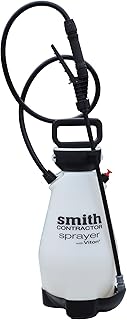
| Smith Performance Sprayers 2 Gallon Sprayer 190216 | 2 gal; Viton seals throughout; 21 in poly wand; pressure release valve | Dedicated weedkiller use with strong mixes |
| Flo-Master by Hudson 24102 2 Gallon Sprayer | 2 gal translucent polypropylene; adjustable cone nozzle, mist to stream | Simple, light manual spot spraying |
| Chapin 20002 2 Gallon Lawn and Garden Sprayer | 2 gal poly; 40-60 psi; adjustable cone nozzle; SureSpray filter | Reliable manual spraying with clean flow |
| Solo 430-2G 2 Gallon Handheld Sprayer | 2 gal HDPE; 45 psi max; 28 in wand; Viton seals; 4 nozzles | Long wand reach and nozzle choice |
How we chose
Every model here is a real two gallon sprayer recorded from a maker or retailer page, and the judging criteria were set by the work itself: droplet control at low pressure, nozzle options for different targets, seal material for weedkiller mixes, and carry comfort across a whole yard round. Pressure figures, runtimes and nozzle counts come from the pages recorded in the sources file. Models above two gallons were set aside, because a small landscaped yard rarely needs more mixed at once, and old mix stored in a big tank ages seals and loses strength.
SideKing Battery Powered Sprayer 2 Gallon
- Tank: 2 gallons, HDPE
- Battery: 2000 mAh in the handle, up to 3 hours listed
- Pressure: 3 adjustable settings with battery indicator
- Wand: telescopic to 23.6 in
- Nozzles: 4 included
Spot work in a landscaped yard is a game of short bursts: a dandelion in the lawn edge, thistles in a gravel path, a patch of clover crowding a border. The SideKing suits that rhythm because the battery lives in the handle and the pump only works when the trigger is pressed, so pressure is waiting at the nozzle without a single pump stroke. Three pressure settings let the same unit lay a coarse, low drift stream on path weeds and then soften for work closer to ornamentals, and the battery indicator removes the guesswork about whether the unit will finish the round.
The telescopic wand reaches 23.6 in, which keeps hands away from the spray pattern and reaches under shrubs where weeds seed themselves first. Four nozzles come in the box, so a fan tip for edges and a cone for individual plants can stay fitted to their own caps and swap in seconds. The honest limits are capacity and chemistry: two gallons is plenty for spot work but the unit is a light duty tool, and strong mixes should be rinsed through the wand and nozzle at the end of the session rather than left sitting in the lines. For a small yard, that care routine takes two minutes and keeps the seals honest.
Pros:
- Instant pressure with no pumping between targets
- Three pressure settings for drift control
- Telescopic wand reaches under shrubs
Cons:
- Two gallon tank suits spot work only
- Light duty build wants rinsing after strong mixes
PetraTools HD2000-S 2 Gallon Battery Sprayer
- Tank: 2 gallons, sling style carry
- Battery: 1300 mAh rechargeable
- Runtime: up to 2 hours listed
- Format: compact battery sprayer for spot and border work
The HD2000-S takes a different route to the same job: a two gallon tank carried on a sling, with a small rechargeable battery driving the pump. In a landscaped yard the sling format is the point. The tank rides on the hip, the wand stays in the free hand, and the gardener steps between beds without setting anything down or dragging a hose of pressurised line across planting. Two hours of listed runtime covers many spot sessions between charges, because spot work uses the pump in seconds-long bursts rather than continuously.
This is the sprayer for gardeners who find a full two gallon hand can awkward to pump and carry at once. The battery does the pressurising, the sling does the carrying, and the gardener does the aiming. What the specification does not promise is high pressure or long reach, and it should not be bought for spraying tall shrubs or fruit trees. Kept to its lane of weeds in beds, paths and lawn edges, it is one of the least tiring ways to work through a small yard's worth of individual targets.
Pros:
- Sling carry keeps both hands free between targets
- Battery pressure with no pumping at all
- Two hours of runtime covers many spot sessions
Cons:
- Not built for tall shrubs or tree work
- Small battery wants charging between long sessions
Roundup 190260 2-Gallon Lawn and Garden Sprayer
- Tank: 2 gallons, poly
- Wand: aluminium
- Nozzles: 3, poly adjustable, high-volume flat fan and foaming
- Cap: pressure release cap fitted
- Weight: 3.9 lb, comfort grip lock-on shut-off
The Roundup 190260 earns its place on one nozzle: the foaming tip. Foam shows exactly where the spray has landed, which in spot work is half the battle, because missed weeds survive and double dosed patches scorch. On gravel paths, drive edges and the joints of paving, a foaming nozzle turns a guessing game into a visible line of treated targets. The other two nozzles, an adjustable poly tip and a high-volume flat fan, cover general weed work and lawn edge bands.
The rest of the specification is sensible manual sprayer practice: a two gallon poly tank, an aluminium wand that will not flex at full pressure, a pressure release cap for safe opening, and a comfort grip shut-off that locks on for longer passes. At 3.9 lb empty it is light enough to carry around a small yard without thought. The maker also lists fewer pump strokes than its earlier designs, which matters across a session of constant re-pressurising. Gardeners who mostly treat visible weeds on hard surfaces will find the foam nozzle alone justifies this model.
Pros:
- Foaming nozzle shows exactly what has been sprayed
- Light 3.9 lb body for carrying around beds
- Pressure release cap makes refilling safer
Cons:
- Manual pumping between targets
- Foam nozzle is for hard surfaces more than lawn
Smith Performance Sprayers 2 Gallon Sprayer 190216
- Tank: 2 gallons
- Seals: Viton throughout pump and shut-off
- Wand: 21 in poly
- Safety: pressure release valve fitted
Every experienced gardener ends up with one sprayer that is allowed to hold weedkiller and one that is not, and the Smith 190216 is built to be the weedkiller one. Viton seals run throughout the pump and the shut-off, and Viton is the seal material that tolerates the solvents and strong mixes that swell and crack ordinary rubber. A dedicated unit with resistant seals, clearly labelled and never borrowed for foliar feeding, is the simplest drift and contamination control there is.
The 21 in poly wand keeps the nozzle a comfortable distance from the hand, and the pressure release valve lets the tank be opened without a hiss of spray. Two gallons matches a small yard's spot round: enough to walk every path and border, not so much that mixed spray sits stored for weeks, which ages both the mix and the seals. Nothing about this sprayer is clever, and that is its virtue. It is a well sealed manual tool that will still be working when novelty features on lesser units have perished.
Pros:
- Viton seals throughout suit strong weedkiller mixes
- Pressure release valve for safe opening
- Ideal size for a dedicated, labelled weedkiller unit
Cons:
- Manual pumping, no battery assist
- Basic nozzle package compared with rivals
Flo-Master by Hudson 24102 2 Gallon Sprayer
- Tank: 2 gallons, translucent polypropylene
- Nozzle: adjustable poly cone, fine mist to solid stream
- Format: manual pump sprayer per the maker manual
The Flo-Master 24102 is the simplest sprayer in this line-up, and for many small yards simple is correct. The translucent two gallon tank shows the mix level at a glance, which helps when a session needs half a tank rather than a full one, and the adjustable poly cone nozzle turns from a fine mist to a solid stream at the tip. For spot work the useful end of that range is the coarse cone and the stream: big droplets that fall where they are aimed instead of drifting across the bed.
The maker manual is the source for this model, and it describes a straightforward manual pump sprayer without electronic features to charge or fail. That plainness cuts both ways. There is no pressure gauge, no nozzle bundle and no battery convenience, so the gardener supplies the pressure and the judgement. In return the unit is light, cheap to keep, and easy to rinse completely, which matters when the same sprayer might carry different mixes across a season. As a first spot sprayer, or a second unit kept for one mix type, it makes a sound case.
Pros:
- Translucent tank shows mix level clearly
- Adjustable nozzle from mist to a solid stream
- Nothing electronic to charge or fail
Cons:
- No pressure gauge or nozzle bundle
- Manual pumping throughout the session
Chapin 20002 2 Gallon Lawn and Garden Sprayer
- Tank: 2 gallons, poly
- Pressure: 40-60 psi, 0.4-0.5 GPM
- Nozzle: adjustable cone
- Wand and hose: 12 in wand, 34 in hose
- Seals: nitrile, with SureSpray anti-clog filter
The Chapin 20002 is the manual sprayer many gardeners start with, and its specification explains why it stays in lists like this one. Working pressure of 40 to 60 psi with flow around 0.4 to 0.5 GPM is the right band for spot work: firm enough to wet a weed thoroughly, gentle enough to keep droplets large and on target. The SureSpray filter sits in the tank to catch the grit and undissolved granules that block nozzles mid session, which is the most common small sprayer frustration removed at source.
The adjustable cone nozzle handles both individual weeds and small patches, the 34 in hose and 12 in wand give enough reach for bed edges without stooping to the tank, and nitrile seals cope with standard garden mixes. It asks for pumping, like every manual unit here, and the wand is shorter than some rivals. As an all-round manual choice for a small landscaped yard, though, the balance of pressure, filtration and simplicity is hard to argue with, and parts support for the brand is easy to find.
Pros:
- In-tank filter stops most nozzle blockages
- 40-60 psi band suits controlled spot work
- Simple, widely supported design
Cons:
- Wand is shorter than several rivals
- Manual pumping between targets
Solo 430-2G 2 Gallon Handheld Sprayer
- Tank: 2 gallons, HDPE
- Pressure: 45 psi maximum
- Wand: 28 in, with 4 ft hose
- Seals: Viton
- Nozzles: 4 included, including adjustable; shoulder strap fitted
The Solo 430-2G stands out for reach and nozzle choice. A 28 in wand on a 4 ft hose puts the nozzle well out in front of the gardener, which is exactly where it should be when the targets are weeds at the back of a border or in the middle of a gravel area that should not be walked on. Four nozzles come with the unit, so a flat fan for edges, a cone for individual plants and a stream for crack and joint work can each stay ready rather than sharing one adjustable tip.
Pressure tops out at 45 psi, a shade lower than the Chapin, and for spot work that is no hardship: lower pressure means larger droplets and less drift onto the plants the yard exists for. Viton seals suit weedkiller duty, a pressure release valve is fitted, and the shoulder strap helps when the round covers the whole garden. The HDPE tank is translucent enough to judge levels in good light. Gardeners whose weeds hide in awkward places, under fences, behind shrubs, at the back of deep beds, will use that long wand on every session.
Pros:
- 28 in wand reaches the back of deep borders
- Four nozzles cover fan, cone and stream work
- Viton seals for weedkiller mixes
Cons:
- 45 psi ceiling is lower than some rivals
- Shoulder strap carry only, no sling battery option
Buying guide
Tank size: mix what the session needs
Two gallons is the sweet spot for spot work in a small yard. A full tank covers every path, border and lawn edge in most landscaped plots, and what is mixed gets used while it is fresh. Weedkillers work best mixed at label strength and used within days, not stored for a month in a warm shed, and a smaller tank makes that discipline natural rather than wasteful.
Translucent tanks, like the Flo-Master and Solo here, help further: half batches for a short round are easy to judge by eye. Whatever the size, label the sprayer with its mix and date. A dedicated weedkiller sprayer, never used for feeding or pest sprays on ornamentals, removes the worst cross contamination accident in the garden.
Nozzle pattern is the whole game
Spot work lives and dies at the nozzle. A flat fan lays an even band along path edges, a cone wets an individual weed in a circle, a stream reaches into paving joints, and a foaming tip marks treated ground on gravel. The Solo's four nozzle set and the Roundup's foaming option exist because one adjustable tip is always a compromise at one of those jobs.
Droplet size matters as much as pattern. Fine mists drift in any breeze and belong to calm greenhouse work, not open beds. For weeds near ornamentals, choose the coarsest setting that still wets the leaf, work with the nozzle close to the target, and consider a simple cone shield over the tip on breezy days. The sprayer cannot fix drift on its own, but the right nozzle gives the gardener a chance.
Pressure: lower is usually better
High pressure feels productive and sprays badly for this job. It shatters the spray into fine droplets that float, and it bounces liquid off waxy weed leaves. The manual units here work between 40 and 60 psi, the Solo at 45 psi maximum, and the battery SideKing offers three settings so the lowest effective one can be chosen. Start low, check the wetting on the first weed, and raise pressure only if the leaf is not coating properly.
Battery sprayers hold their pressure steady as the tank empties, while manual units fade between pump strokes. That steadiness is the real battery advantage in spot work, more than the saved effort: the fiftieth weed gets the same droplet size as the first, so coverage stays even across the whole round.
Seals, filters and rinsing decide service life
Weedkillers are hard on seals. Viton, fitted to the Smith and the Solo, tolerates strong mixes that swell plain rubber, and nitrile, fitted to the Chapin, handles standard garden chemistry well. Whichever sprayer is chosen, rinsing is the habit that protects it: empty the tank, flush clean water through wand and nozzle, and store the unit depressurised with the cap loose.
Filters earn their keep quietly. The Chapin's in-tank SureSpray filter catches the particles that block nozzles, and any sprayer benefits from mixing in a bucket and straining into the tank when powders are used. A blocked nozzle mid round tempts gardeners to clear it with a pin, which scars the tip and ruins the pattern, so prevention beats cure at every step.
Carry comfort across a whole round
A two gallon tank of water weighs roughly seventeen pounds before the sprayer itself is counted. How that weight rides decides whether the last beds get the same care as the first. Sling carry, as on the PetraTools, keeps the load on the hip and both hands free. A shoulder strap, as on the Solo and Chapin, suits a slower round with the tank set down at each bed.
Handle battery designs like the SideKing put the weight in the hand only while spraying, with the tank carried separately between targets. None of these formats is wrong, but gardeners with back or shoulder trouble should choose the format first and the brand second, because an uncomfortable sprayer stays in the shed while the weeds keep their schedule.
FAQ
What size sprayer is best for spot treating weeds in a small yard?
Two gallons suits most small landscaped yards. It covers a full round of paths, borders and lawn edges, keeps the mixed spray fresh, and stays light enough to carry comfortably. One gallon units work for tiny plots but mean refilling on bigger rounds, while four gallon backpacks mix more than spot work needs and store ageing mix.
How do I stop weedkiller drifting onto my plants?
Use the coarsest nozzle setting that wets the weed, keep pressure low, hold the nozzle close to the target and spray on a calm morning. A foaming nozzle on hard surfaces shows exactly where spray has landed. A simple cardboard or cone shield around the tip protects neighbouring foliage when targets grow tight against plants worth keeping.
Is a battery sprayer better than a manual pump sprayer for spot work?
For steadiness, yes: battery units hold one pressure from first weed to last, and there is no pumping to break the rhythm. Manual sprayers are simpler, lighter at the same capacity and have nothing to charge. In this line-up the SideKing and PetraTools make the battery case, while the Chapin, Solo and Smith show how far a good manual design goes.
Can I use the same sprayer for weedkiller and for feeding plants?
It is strongly discouraged. Residue survives ordinary rinsing and can damage ornamentals at very low concentrations. Keep a dedicated, clearly labelled weedkiller sprayer, the Smith 190216 with its Viton seals is built for that role, and use a second unit for feeds and gentler mixes. The cost of a second small sprayer is far below the cost of a damaged border.
What nozzle should I use for weeds in gravel and path joints?
A foaming nozzle, like the one supplied with the Roundup 190260, is ideal on gravel because the foam marks treated ground and stays where it lands. A narrow stream or jet setting also works well in paving joints. Avoid fine cone mists on hard surfaces, since they drift and waste mix on stone rather than leaf.
How long does mixed weedkiller stay usable in the tank?
Follow the product label first, but as a working rule mixed spray is best used within a few days. Strength fades, seals soak in the chemistry, and stored mix invites accidents. The two gallon format of every sprayer here is chosen partly to make small, fresh batches the easy habit.
Conclusion
Pick by working style. Gardeners who want to walk and spray without pumping should start with the SideKing, or the PetraTools HD2000-S where the lightest carry matters. Hard surface weed work belongs to the Roundup 190260 and its foaming nozzle. Manual loyalists are well served by the Chapin 20002 for filtration, the Solo 430-2G for reach and nozzles, and the Smith 190216 as the dedicated weedkiller unit, with the Flo-Master 24102 as the plain, honest spare. Any of them, used at low pressure with the right nozzle and rinsed after work, will keep a small landscaped yard clean without endangering the plants that make it worth keeping.
Related guides
More from Amazon
Programs that pair well with the guide above. Offers and eligibility are set by Amazon and may change.
Collect the home and kitchen items you want in one registry that guests can shop from.
Create a wedding registrySet up recurring deliveries of everyday items on eligible products. Terms and savings are set by Amazon.
Explore Subscribe & SaveFree shipping on eligible items, Prime Video and more. Eligible new members can start with a free trial.
Start a Prime free trialAudiobooks and podcasts to listen to on the go. Eligible new members can start with a free trial.
Try Audible freeAs an Amazon Associate we earn from qualifying purchases.
More ways to save on your garden
Programs that pair well with the guide above. Offers and eligibility are set by Amazon and may change.
Fast, free shipping on eligible items, plus Prime Video and more. Eligible new members can start with a free trial.
Start a Prime free trialSet up recurring deliveries of everyday items on eligible products. Terms and savings are set by Amazon.
Explore Subscribe & SaveRead from a huge library of eBooks, including how-to guides and cookbooks. Eligible new members can start with a free trial.
Try Kindle UnlimitedAudiobooks and podcasts for the commute, the garage or the kitchen. Eligible new members can start with a free trial.
Try Audible freeAs an Amazon Associate we earn from qualifying purchases. Using these links costs you nothing extra.


Write Your Review
No reviews yet. Be the first to share your experience!