
Key takeaways
- Manual pump garden sprayers for small backyard orchards compared: piston and diaphragm pumps, seal materials, wand lengths and tank sizes for fruit trees too.
As an Amazon Associate I earn from qualifying purchases. This post may contain affiliate links at no extra cost to you.
Our top picks at a glance
3 products from this guide, in the order reviewed below.


As an Amazon Associate we earn from qualifying purchases. Prices and availability can change.
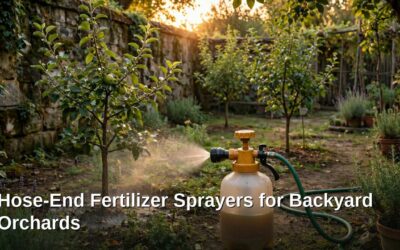
A small backyard orchard, a dozen trees or fewer, lives in the gap between a hand spray bottle and a powered rig. Dormant sprays, fungicide cover through a wet spring, insect control timed to the calendar: the work is regular, the volumes are modest, and the sprayer that does it has to reach the top of a semi-dwarf tree, shrug off copper and sulphur mixes, and keep its seals through a season of chemistry. That is the brief behind this guide to the best manual pump garden sprayers for small backyard orchards: every pick is pumped by hand, either a handheld tank you pressurise and carry, a piston backpack or a diaphragm backpack, and every one publishes the details orchard work turns on, pump type, working pressure, seal material, wand and hose length. Seal material gets unusual attention here, deliberately. Orchard mixes are hard on rubber, and the difference between a sprayer that lasts one season and one that lasts six is usually a small ring of Viton where a cheaper sprayer uses ordinary rubber.
Quick verdict
The Chapin 26021XP is the handheld to beat for orchard work: a two-gallon piston sprayer with Viton seals, a 20 inch wand and a 48 inch hose, built in Chapin's ProSeries line for exactly the chemical exposure orchard sprays involve. Growers whose trees are big enough that a handheld means endless refills should step up to a backpack: the Solo 473P brings a three-gallon piston pump rated to 90 psi with a 28 inch wand for reaching into canopy, while the Solo 475 Professional uses a diaphragm pump that handles wettable powders and the abrasive mixes orchard programmes often include. The Smith NL400 is the heavy-duty backpack alternative, with an internal no-leak pump design rated to 150 psi. At the simpler end, the Roundup 190260 gives a two-gallon tank with three nozzles including a flat fan for cover sprays, the Flo-Master 24102 is the basic two-gallon workhorse, and the Husqvarna two-gallon handheld adds Viton seals and a stainless wand at a handheld size.
| Product | Key spec | Best for |
|---|---|---|
| Chapin 26021XP ProSeries XP 2 Gallon Sprayer | Piston; 40-60 psi; Viton seals; 20 in wand | Handheld orchard spraying with harsh mixes |
| Solo 473P Piston Backpack Sprayer | 3 gal; piston to 90 psi; 28 in wand | Reaching semi-dwarf canopy from the ground |
| Solo 475 Professional Diaphragm Backpack Sprayer | 4 gal; diaphragm to 60 psi; Viton seals | Wettable powders and abrasive orchard mixes |
| Smith Performance NL400 No Leak Pump Backpack Sprayer | 4 gal; internal pump to 150 psi; Viton seals | Heavy-duty backpack for bigger backyard orchards |
| Roundup 190260 2-Gallon Lawn and Garden Sprayer | 2 gal; 3 nozzles incl. flat fan | Cover sprays with a simple handheld |
| Flo-Master by Hudson 24102 2 Gallon Sprayer | 2 gal; adjustable cone nozzle, mist to stream | Basic, light orchard and spot work |
| Husqvarna 2 Gallon Handheld Sprayer | 2 gal; Viton seals; stainless steel wand | Handheld durability for regular programmes |
How we chose
Manual operation was the first gate: no batteries, no engines, just a pump handle, because a small orchard's spraying calendar is a series of short jobs where a manual sprayer is charged and working in a minute and stored dry without a second thought. The second gate was published orchard-relevant specification: pump type, because piston and diaphragm pumps behave differently with the wettable powders common in orchard programmes; working pressure, because canopy reach is pressure plus wand; and seal material, because copper, sulphur, oils and solvents attack ordinary seals. Wand and hose lengths were weighed as reach equipment, not accessories: the difference between a 12 inch and a 28 inch wand is the difference between spraying the lower canopy and spraying the tree. Tank size was treated as a rhythm choice rather than a virtue, two gallons carried in the hand for a few young trees, three or four on the back for a mature row. Every figure below comes from a maker, manual or retailer page opened for this guide.
Chapin 26021XP ProSeries XP 2 Gallon Sprayer
- Tank: 2 gal poly
- Pump: piston
- Working pressure: 40 to 60 psi
- Seals: Viton
- Wand: 20 in
- Hose: 48 in
The 26021XP is what a handheld orchard sprayer looks like when it is built for the chemistry first. Viton seals throughout the pump and shut-off tolerate the oils, copper and sulphur mixes that swell and crack ordinary rubber, and the piston pump holds a steady 40 to 60 psi, which through the 20 inch wand gives a working reach into the lower and middle canopy of a semi-dwarf tree from the ground. The 48 inch hose is longer than most handhelds offer, and it changes how the sprayer is used: set the tank down at the tree, work the wand around the canopy with both hands free, then move on. Two gallons is the right fill for a handful of trees per session, heavy enough to matter and light enough to carry between them. For a small orchard on a regular spray programme, this is the handheld benchmark the others are measured against, and the one to choose if the sprayer will see dormant oil and copper every single year.
Pros:
- Viton seals suit dormant oils, copper and sulphur mixes
- Long 48 in hose lets the tank rest while you work the wand
- Piston pump holds steady pressure for even cover
Cons:
- Two gallons means refills on a longer tree row
- Handheld format still limits reach on tall standard trees
Solo 473P Piston Backpack Sprayer
- Tank: 3 gal
- Pump: piston, 0 to 90 psi
- Seals: Viton
- Wand: 28 in
- Hose: 48 in
The 473P is the reach pick. A 28 inch wand on a 48 inch hose, driven by a piston pump rated up to 90 psi, puts spray into the top of a semi-dwarf canopy from the ground, which is where orchard spraying either succeeds or quietly fails, because the top of the tree is where sunscald, aphids and fungal pressure all start. Three gallons on the back is the balanced load: enough mix for a row of mature backyard trees in one fill, without the full weight of a four-gallon unit on a long morning. Viton seals keep the pump honest through the season's chemistry. Piston pumps and abrasive wettable powders are uneasy partners over years of use, so if your programme leans heavily on powder mixes, compare the diaphragm Solo below; for liquid programmes, dormant oils and most fungicides, the 473P's pressure and reach are the strongest combination in this guide. The pump handle on a backpack doubles as the pressure keeper, and a few strokes between trees keeps the pattern honest.
Pros:
- 90 psi ceiling and 28 in wand give the best canopy reach here
- Three-gallon tank balances capacity against carrying weight
- Viton seals for orchard chemistry
Cons:
- Piston pump is less fond of abrasive wettable powders
- Backpack format is more sprayer than a few young trees need
Solo 475 Professional Diaphragm Backpack Sprayer
- Tank: 4 gal
- Pump: diaphragm, to 60 psi
- Seals: Viton
- Compatibility: wettable powders and bleach listed by the maker
- Features: quick-release hose connector; built-in pressure gauge on the line
Where the 473P is the reach pick, the 475 Professional is the chemistry pick. A diaphragm pump has no sliding cylinder wall for grit to score, so the wettable powders that orchard programmes rely on, sulphur and clay-based mixes among them, pass through without grinding the pump down, and the maker lists wettable powders and bleach among its intended uses. Sixty psi is less than the piston Solo's ceiling, and the honest consequence is a little less reach at the top of tall trees; for semi-dwarf and dwarf orchards, which is most backyard plantings now, it is ample. Four gallons is a full morning's mix for a small orchard in one fill, and the built-in pressure gauge in the line takes the guesswork out of keeping the pattern consistent from the first tree to the last. Viton seals complete the picture. If your spray diary is heavy on powders, this is the sprayer in the guide designed around your diary.
Pros:
- Diaphragm pump handles wettable powders without scoring
- Four-gallon tank covers a small orchard in one fill
- Pressure gauge keeps application consistent tree to tree
Cons:
- 60 psi ceiling gives less top-canopy reach than the piston model
- Full four-gallon load is a real weight on the back
Smith Performance NL400 No Leak Pump Backpack Sprayer
- Model: 190461 NL400
- Tank: 4 gal
- Pump: internal No Leak Pump design, to 150 psi
- Wand: 21 in poly-lined stainless
- Seals: Viton
- Features: built-in agitator; padded shoulder harness
The NL400's defining idea is in its name: the pump is internal, so the seals and working parts sit inside the tank rather than in an external cylinder, and a leak, if one ever starts, starts into the tank instead of down the operator's back. Anyone who has worn a leaking backpack sprayer through an orchard round will understand why that design exists. The rated ceiling of 150 psi is the highest here and well beyond orchard need, which means the pump works unstressed at the 40 to 60 psi a good cover spray wants, with pressure in reserve for a jet stream to the top of a tall tree. The built-in agitator keeps wettable powders suspended between trees, a small feature that pays off on every tank of sulphur. The poly-lined stainless wand resists the chemistry at the point where it concentrates. This is the heavy-duty option for the larger backyard orchard, a dozen mature trees and a full programme, where the sprayer earns its keep across many seasons.
Pros:
- Internal pump design keeps any leak inside the tank
- Built-in agitator suits powder mixes
- High pressure ceiling means unstressed working pressure
Cons:
- Most sprayer here; over-specified for a few young trees
- Four-gallon class weight when full
Roundup 190260 2-Gallon Lawn and Garden Sprayer
- Tank: 2 gal poly
- Wand: aluminium
- Nozzles: 3 included, poly adjustable, high-volume flat fan and foaming
- Cap: pressure release cap
- Shut-off: comfort grip, lock-on
The Roundup 190260 earns its place on the nozzle rack. Orchard cover sprays want a flat fan pattern for even deposition on foliage, spot work wants an adjustable cone, and the three included nozzles cover both without an accessory order. The aluminium wand is light in the hand through a long session, the pressure release cap makes opening the tank after a round a safe, unhurried action rather than a hiss of leftover pressure near your face, and the lock-on shut-off spares your grip during long passes along a row. What the listing does not publish is a seal material or a working pressure figure, so this is the pick for standard water-based programmes rather than the harshest chemistry, and a see product page check on seals is wise if dormant oil is central to your calendar. As a first orchard sprayer for a few trees, or a second sprayer kept for one job such as a dedicated fungicide unit, it is sensibly equipped.
Pros:
- Three nozzles include the flat fan that cover sprays want
- Pressure release cap is a genuine safety convenience
- Light aluminium wand for long sessions
Cons:
- Seal material and pressure not published in the data consulted
- Two-gallon tank means refills on mature rows
Flo-Master by Hudson 24102 2 Gallon Sprayer
- Tank: 2 gal translucent polypropylene
- Nozzle: adjustable poly cone, fine mist to solid stream
- Source: maker manual
The Flo-Master 24102 is the simple end of the guide: a translucent two-gallon tank, so the mix level is always visible at a glance, and a single adjustable cone nozzle that twists from a fine mist for close work to a solid stream for reaching a trunk or a high branch. There is a real orchard role for a sprayer like this. Young trees in their first seasons need small, frequent, gentle applications; a dedicated simple sprayer for one mix, kept clean and used often, beats a complex one shared across everything. The maker's manual documents the nozzle range plainly, and the specification published beyond that is brief, with no stated pressure or seal figures in the material consulted, so treat it as the light-duty member of the list: water-based mixes, modest trees, spot and young-tree work. Within that role it is honestly matched, easy to rinse, easy to store, and cheap to dedicate to a single job so cross-contamination between mixes never becomes a question.
Pros:
- Translucent tank shows mix level at a glance
- One nozzle covers mist to stream for young-tree work
- Simple to clean and dedicate to a single mix
Cons:
- No published pressure or seal specification in the data consulted
- Light-duty design is not the choice for a full mature orchard
Husqvarna 2 Gallon Handheld Sprayer
- Tank: 2 gal, tear-shaped
- Pressure class: 40 psi
- Seals: Viton throughout pump and shut-off
- Wand: stainless steel
Husqvarna's handheld makes the shortlist on two specification lines that matter out of proportion to their length: Viton seals throughout the pump and shut-off, and a stainless steel wand. Together they describe a two-gallon sprayer built to be used with real orchard chemistry for years rather than nursed through a season, in the carry-it-in-one-hand format that suits a small orchard's short rounds. The tear-shaped tank sits stably when set down between trees, a small ergonomic point that anyone who has chased a tipping round tank across a slope will appreciate. Forty psi is the modest end of the pressure range here, enough for dwarf and semi-dwarf canopies with the wand's help, and the honest limit is tall standard trees, where a backpack's pressure and wand length take over. For a compact orchard on a regular programme, where the sprayer comes out every fortnight through the season, this is the durable handheld alternative to the Chapin, trading a little pressure for stainless hardware.
Pros:
- Viton seals throughout, not just in the pump
- Stainless wand resists orchard chemistry
- Stable tank shape for setting down between trees
Cons:
- 40 psi class limits reach on tall trees
- Handheld two gallons still means refills on long rows
Buying guide
Pressure, reach and the height of your trees
Canopy reach is the product of pressure, wand length and where you stand. A dwarf tree asks little; a semi-dwarf at twelve to fifteen feet wants a wand of twenty inches or more and pressure in the 40 to 90 psi working band to carry a pattern to the top without your climbing a ladder with a tank on your back, which should never be part of the plan. Judge sprayers by the tallest tree you own, not the average one, because the top of the tallest tree is where coverage fails first and where pests and fungal pressure establish themselves earliest in the season.
Seals and orchard chemistry
Orchard programmes run chemistry that garden spraying rarely touches: dormant oils, copper, sulphur, lime and solvents in some formulations, all of which work on seal materials between sprays as the residue sits in the pump. Viton is the seal material named again and again in the professional lines here because it tolerates that exposure; nitrile and ordinary rubber serve lighter duty and shorter lives. Whatever the sprayer, rinse the whole system with clean water after every session, pump clean water through the wand until it runs clear, and store the sprayer empty and depressurised. That five-minute habit does more for seal life than any specification, and it keeps last week's mix out of this week's trees.
Tank size and the rhythm of a spray morning
Match the tank to the round, not to ambition. Two gallons in the hand covers a few young trees per fill and keeps the carried weight honest; three gallons on the back is the balanced load for a row of mature semi-dwarfs; four gallons is a full morning for a dozen trees and a genuine weight that your shoulders will have opinions about by the last tree. Mixing only what the round needs also matters: leftover mix sitting in a tank is a storage problem and a seal problem, so a tank that empties as the round ends is a feature, not a limitation.
Nozzles for canopy, trunk and ground work
Three patterns do nearly all orchard work. A flat fan gives the even sheet a cover spray needs across foliage. An adjustable cone handles close work, trunk and scaffold spraying, and spot treatment where the target is one branch rather than the whole tree. A solid stream reaches height and distance for a specific target. A sprayer that ships with the fan and the cone, or accepts standard interchangeable tips, covers the calendar; keep spare tips and a small brush in the spray kit, because a partly blocked nozzle at the far end of the orchard is a long walk back.
FAQ
Is a manual pump sprayer enough for fruit trees?
For a backyard orchard of dwarf and semi-dwarf trees, yes, comfortably. The models here hold 40 to 90 psi working pressure with wands up to 28 inches, which reaches the top of a semi-dwarf canopy from the ground. Very tall standard trees are the limit of any ground-based manual sprayer; the practical answers there are pruning to a manageable height, which orchard practice recommends anyway, rather than a bigger sprayer.
What is the difference between piston and diaphragm pumps?
A piston pump slides a piston in a cylinder and typically reaches higher pressure, which buys reach, but abrasive particles in wettable powders can score the cylinder over time. A diaphragm pump flexes a membrane instead, tolerates powders and gritty mixes far better, and usually tops out at lower pressure. Liquid programmes favour either; powder-heavy programmes favour the diaphragm.
Why does seal material matter so much in an orchard sprayer?
Because orchard mixes sit in the pump between jobs and include oils, copper and sulphur that swell or harden ordinary rubber seals. A sprayer with degraded seals loses pressure, drips mix where it should not, and eventually fails mid-round. Viton seals are the professional answer used across the stronger models here, and rinsing after every session protects any seal material.
How do I keep a manual sprayer working season after season?
Rinse the tank, pump clean water through the hose and wand until it runs clear, and leave the sprayer empty, open and depressurised in storage. Check the nozzle and any in-line filter for residue before the first spring round, and work the pump handle a few times mid-winter if the sprayer sits unused for months. Most sprayer failures are residue failures, not mechanical ones.
How much mix does a small orchard tree need?
As a rough guide, a young tree may take a quarter to half a gallon to wet its canopy properly, a mature semi-dwarf one to two gallons, applied until the foliage is evenly wet without heavy runoff. That arithmetic is why tank size maps to tree count so directly: a two-gallon handheld serves a few young trees per fill, while a four-gallon backpack covers a row of mature trees in one mix.
Conclusion
A small orchard rewards the sprayer that matches its chemistry and its canopy, and keeps doing so for seasons. The Chapin 26021XP is the handheld benchmark, with Viton seals and a hose long enough to work a tree properly. The Solo pair splits the backpack choice cleanly: the 473P for reach, the 475 Professional for powder-heavy programmes, with the Smith NL400 as the heavy-duty alternative whose pump cannot leak down your back. The Roundup, Flo-Master and Husqvarna cover simpler and smaller rounds at handheld size. Choose by your tallest tree and your harshest mix, rinse after every round, and a manual sprayer will carry an orchard programme for years.
Related guides
More from Amazon
Programs that pair well with the guide above. Offers and eligibility are set by Amazon and may change.
Collect the home and kitchen items you want in one registry that guests can shop from.
Create a wedding registrySet up recurring deliveries of everyday items on eligible products. Terms and savings are set by Amazon.
Explore Subscribe & SaveFree shipping on eligible items, Prime Video and more. Eligible new members can start with a free trial.
Start a Prime free trialAudiobooks and podcasts to listen to on the go. Eligible new members can start with a free trial.
Try Audible freeAs an Amazon Associate we earn from qualifying purchases.
More ways to save on your garden
Programs that pair well with the guide above. Offers and eligibility are set by Amazon and may change.
Fast, free shipping on eligible items, plus Prime Video and more. Eligible new members can start with a free trial.
Start a Prime free trialSet up recurring deliveries of everyday items on eligible products. Terms and savings are set by Amazon.
Explore Subscribe & SaveRead from a huge library of eBooks, including how-to guides and cookbooks. Eligible new members can start with a free trial.
Try Kindle UnlimitedAudiobooks and podcasts for the commute, the garage or the kitchen. Eligible new members can start with a free trial.
Try Audible freeAs an Amazon Associate we earn from qualifying purchases. Using these links costs you nothing extra.


Write Your Review
No reviews yet. Be the first to share your experience!