
Key takeaways
- Manual pump garden sprayers for small landscaped yards compared on tank size, pump pressure, wand length, seals and nozzle choice for beds and shrubs here.
As an Amazon Associate I earn from qualifying purchases. This post may contain affiliate links at no extra cost to you.
Our top picks at a glance
5 products from this guide, in the order reviewed below.


As an Amazon Associate we earn from qualifying purchases. Prices and availability can change.
A landscaped yard is sprayed in short, careful passes rather than long field runs. One minute the job is a fine mist over a rose bed, the next it is a narrow stream along a path edge where the mix must not drift onto the planting beside it. That is why gardeners comparing the best manual pump garden sprayers for small landscaped yards should start with control, not capacity. A two gallon tank is usually plenty for a small yard, and it keeps the carried weight low enough that the wand stays steady. What separates the models below is how they build and hold pressure, what their seals are made from, how long the wand and hose are, and whether the nozzle adjusts from mist to stream without swapping parts. Each figure quoted comes from the maker, manual or retailer page for that exact model, and where a page does not state a figure it is shown as a dash. This selection takes a fresh angle: handheld pump sprayers only, sized for yards where a backpack unit would be more machine than the work needs.
Quick verdict
The Chapin 20002 is the sensible starting point, with a stated flow range and an anti-clog filter in a two gallon tank. The Solo 430-2G answers with the longest wand and hose in this group and four nozzles in the box, while the Smith Performance 190216 and the Husqvarna handheld put Viton seals at the centre of their appeal for growers who spray varied mixes. The HDX 1502HDXA is the simple, light duty option for soap and feed mixes, the Roundup 190260 adds a foaming nozzle for clinging applications, and the Chapin 16200 remains a proven light two gallon choice at just 2.3 lb before filling.
| Product | Key spec | Best for |
|---|---|---|
| Chapin 20002 2 Gallon Lawn and Garden Sprayer | 2 gal, 40-60 psi, 0.4-0.5 GPM flow as listed | A stated flow range and anti-clog filter in one tank |
| Solo 430-2G 2 Gallon Handheld Sprayer | 2 gal HDPE, 45 psi max, 28 in wand, 4 ft hose | Reach into shrubs and under low branches |
| HDX 2 Gallon Multi-Purpose Pump Sprayer 1502HDXA | 2 gal, funnel top, pressure release valve, lock-on trigger | Simple light duty spraying for feeds and soapy mixes |
| Husqvarna 2 Gallon Handheld Sprayer | 2 gal tear-shaped tank, Viton seals, stainless steel wand | Seal quality and a metal wand in a handheld size |
| Roundup 190260 2-Gallon Lawn and Garden Sprayer | 2 gal, aluminium wand, three nozzles including foaming | Foaming and fan applications around paths and edging |
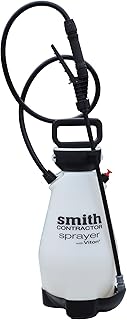
| Smith Performance Sprayers 2 Gallon Sprayer 190216 | 2 gal, Viton seals throughout, 21 in poly wand | A mid length wand with premium seal material |
| Chapin 16200 2-Gallon Pump Sprayer | 2 gal, 60 psi max, 12 in wand, 2.3 lb | The lightest full specification option here |
How we chose
Only manual pump sprayers were considered: no battery models, no hose end applicators and no tow behind units, because the keyword asks for a hand pumped machine. Tank sizes were kept at one to three gallons, the range a gardener can carry around a small landscaped yard without the spray pattern suffering as arms tire. For each model the maker, manual or retailer page was used for tank size, pressure, wand and hose length, seal material and nozzle details. Seal material is recorded wherever a page states it, because seals decide how a sprayer copes with different mixes over a season. Weight is listed where published, since a full two gallon tank already adds roughly sixteen pounds of liquid before the sprayer itself is counted.
Chapin 20002 2 Gallon Lawn and Garden Sprayer
- Tank: 2 gal poly
- Pressure: 40-60 psi as listed
- Flow: 0.4-0.5 GPM as listed
- Nozzle: adjustable cone
- Wand: 12 in
- Hose: 34 in
- Seals: nitrile
- Filter: SureSpray anti-clog filter
The Chapin 20002 leads this selection because its listing does something many sprayer pages avoid: it states a flow range alongside the pressure range. A listed 0.4 to 0.5 gallons per minute at 40 to 60 psi tells a gardener roughly how fast a tank will empty on a bed round, which is the figure that decides whether two gallons covers the yard or falls short at the last shrub. The SureSpray anti-clog filter sits in the tank to catch debris before it reaches the nozzle, a small feature that matters when mixes are made up in a watering can that is never perfectly clean.
The 12 in wand and 34 in hose are the shorter pairing in this group, which suits close work around pots, edging and low shrubs where a long wand keeps knocking foliage. The adjustable cone nozzle covers the mist to stream range most small yard jobs need without a pocket full of tips. Nitrile seals are the listed seal material, a standard choice for general garden mixes. For a first manual sprayer, or a second one kept for feeds while another holds weed mixes, the 20002 is a tidy, honestly specified option.
Pros:
- Flow range stated as well as pressure range
- In-tank anti-clog filter
- Compact wand suits close bed work
- Two gallon size balances capacity and weight
Cons:
- Shortest wand and hose pairing in this group
- Nitrile seals rather than Viton
- Single adjustable nozzle listed
Solo 430-2G 2 Gallon Handheld Sprayer
- Tank: 2 gal HDPE
- Maximum pressure: 45 psi
- Wand: 28 in
- Hose: 4 ft
- Seals: Viton
- Nozzles: four included, including adjustable
- Extras: pressure release valve and shoulder strap
The Solo 430-2G is the reach pick. Its 28 in wand is more than double the length of the Chapin wands in this group, and the 4 ft hose lets the tank sit on the ground while the wand works into the middle of a shrub or under a low hedge without the operator leaning into the foliage. For a landscaped yard, where the plants being sprayed are often the plants you least want to brush against, that stand-off distance is worth more than a few extra psi. The listed maximum pressure is 45 psi, ample for mist and fan work at close range.
Four nozzles are included, including an adjustable type, so the spray can be swapped from a fine mist for foliage to a coarser pattern for path edges without returning to the shed. Viton seals are fitted, the seal material growers look for when mixes vary across the season. A pressure release valve lets the tank be opened safely after use, and the shoulder strap helps when the yard round involves carrying the tank between beds rather than setting it down at each stop.
Pros:
- Longest wand and hose in this group
- Four nozzles included
- Viton seals
- Pressure release valve and shoulder strap fitted
Cons:
- Lower maximum pressure than the Chapin models
- Two gallon tank only, no larger sibling in this listing
- Long wand can feel unwieldy in tight corners
HDX 2 Gallon Multi-Purpose Pump Sprayer 1502HDXA
- Tank: 2 gal, translucent
- Fill opening: large funnel top
- Nozzle: adjustable, stream to mist
- Valve: pressure release valve fitted
- Handle: ergonomic pump handle
- Trigger: thumb trigger with lock-on
- Hose: kink-resistant as listed
The HDX 1502HDXA is the straightforward option sold through a big home retailer, and its listing concentrates on the handling details that decide whether a sprayer gets used or left in the shed. A large funnel top makes filling and mixing in the tank less of a spill risk, the translucent tank shows the level at a glance, and an ergonomic pump handle with a lock-on thumb trigger reduces hand strain on a longer round. A pressure release valve is fitted, which should be standard on every pump sprayer and is still worth checking for.
The retailer page used for this model does not publish a pressure figure, so none is claimed here; in practice this class of sprayer is aimed at light duty work such as liquid feeds, insecticidal soap style mixes and spot work around beds, rather than driving a long lance. It arrives pre-assembled according to the listing, which suits a gardener who wants a second, clearly labelled sprayer for one type of mix. Keep it for gentle mixes, rinse it after use, and it covers the small yard basics without fuss.
Pros:
- Funnel top makes filling cleaner
- Lock-on trigger eases hand strain
- Pressure release valve fitted
- Translucent tank shows remaining level
Cons:
- No pressure figure published on the page used
- Aimed at light duty mixes
- Seal material not stated on the page used
Husqvarna 2 Gallon Handheld Sprayer
- Tank: 2 gal, tear-shaped
- Pressure class: 40 psi as listed
- Seals: Viton throughout pump and shut-off
- Wand: stainless steel
- Nozzle: see product page
- Weight: –
The Husqvarna handheld puts its money into the parts that age first. The listing highlights Viton seals throughout the pump and the shut-off, and a stainless steel wand in place of the plastic wands fitted to most handheld sprayers. A metal wand does not flex away when you push it into a shrub, and it tolerates being knocked against edging and stone without the tip damage that ruins a plastic wand spray pattern. The tear-shaped two gallon tank is designed to sit stably and pour cleanly.
The listed pressure class is 40 psi, the lowest figure in this group, and for a landscaped yard that is rarely a problem: mist and fan nozzles for foliage work run happily at modest pressure, and lower pressure means less drift onto neighbouring plants, which is half the battle in a planted yard. Choose this model if your spraying is mostly careful foliage work with varied mixes, where seal quality and a wand that survives knocks matter more than headline pressure.
Pros:
- Viton seals throughout pump and shut-off
- Stainless steel wand resists knocks
- Stable tear-shaped tank design
- Modest pressure reduces drift on foliage work
Cons:
- Lowest listed pressure class in this group
- Nozzle details sparse on the page used
- Weight not stated on the page used
Roundup 190260 2-Gallon Lawn and Garden Sprayer
- Tank: 2 gal poly
- Wand: aluminium
- Nozzles: three, poly adjustable, high-volume flat fan and foaming
- Cap: pressure release cap
- Shut-off: comfort grip with lock-on
- Weight: 3.9 lb
- Maker note: 25 percent fewer pump strokes as listed
The Roundup 190260 stands out for its nozzle set. Alongside a poly adjustable nozzle it includes a high-volume flat fan and a foaming nozzle, and the foaming option is genuinely useful in a landscaped yard: a foam marks where you have been, clings to vertical faces such as wall bases and fence lines, and shows gaps in coverage that a clear spray hides. The flat fan suits path edges and bands along beds, where a clean edge to the pattern keeps mix off the planting.
An aluminium wand keeps weight down while staying stiffer than plastic, and at 3.9 lb the sprayer itself is light before filling. The maker lists 25 percent fewer pump strokes, a claim about pumping effort that translates into less arm work to bring the tank to pressure. The pressure release cap is the safety detail to use every time: vent the tank before opening, every time, however short the job was. For yards with a lot of hard landscaping to spray around, this nozzle set is the most versatile in the group.
Pros:
- Foaming nozzle marks coverage and clings to vertical faces
- Flat fan nozzle suits path and bed edges
- Light aluminium wand, 3.9 lb sprayer weight
- Pressure release cap fitted
Cons:
- Seal material not stated on the page used
- Hose length not stated on the page used
- Brand labelling may not suit every mix you spray
Smith Performance Sprayers 2 Gallon Sprayer 190216
- Tank: 2 gal
- Seals: Viton throughout pump and shut-off
- Wand: 21 in poly
- Valve: pressure release valve fitted
- Nozzle: see product page
- Pressure: see product page
The Smith Performance 190216 sits between the compact Chapins and the long reach Solo in this group. Its 21 in poly wand gives useful stand-off for spraying into beds from a path without the full length of the Solo wand to manage in tight corners. The retailer page highlights Viton seals throughout the pump and the shut-off, the same seal-first thinking as the Husqvarna, and a pressure release valve for safe opening.
The page used for this model does not publish pressure or nozzle figures, so they are shown as see product page rather than borrowed from a sibling model; Smith publishes fuller data on its own product literature for buyers who need it. What the listing does establish is the combination a small yard gardener actually uses daily: two gallons, a mid length wand, quality seals and a safe way to vent the tank. It is a sound choice for a single sprayer that will handle feeds one week and spot weed work the next, provided it is rinsed well between mix types.
Pros:
- Viton seals throughout pump and shut-off
- 21 in wand balances reach and control
- Pressure release valve fitted
- Two gallon size suits small yard rounds
Cons:
- Pressure figure not published on the page used
- Nozzle set not detailed on the page used
- Poly wand rather than metal
Chapin 16200 2-Gallon Pump Sprayer
- Tank: 2 gal translucent poly
- Nozzle: adjustable poly cone, mist to stream
- Wand: 12 in
- Hose: 34 in
- Filter: anti-clog filter
- Seals: nitrile
- Maximum pressure: 60 psi
- Weight: 2.3 lb
- Warranty: 1-year limited as listed
The Chapin 16200 closes the list as the lightest sprayer here with a full published specification: 2.3 lb before filling, a 60 psi maximum that matches the highest figure in this group, and an anti-clog filter to keep debris away from the nozzle. The adjustable poly cone nozzle runs from mist to stream, covering the two patterns a small yard needs most, and the translucent tank makes both mixing and level checking simple.
Like the 20002 it pairs a 12 in wand with a 34 in hose, a compact combination that works close to the tank. That suits container groups, edging and low shrubs, and the light weight makes it the sprayer most likely to be picked up for a two minute job rather than put off. Nitrile seals are fitted, and a one year limited warranty is listed. Gardeners who spray little and often, rather than in long sessions, will find this the easiest model here to live with.
Pros:
- Lightest sprayer in this group at 2.3 lb
- 60 psi maximum matches the group best
- Anti-clog filter fitted
- Simple one nozzle adjustment from mist to stream
Cons:
- Short wand and hose limit reach into shrubs
- Nitrile seals rather than Viton
- One year warranty is the shortest listed here
Buying guide
Tank size, pump effort and pressure in plain terms
For a small landscaped yard, two gallons is the size that keeps turning up in this list for a reason. A full two gallon tank weighs roughly sixteen pounds in liquid alone, and a sprayer that is too heavy gets swung, tilted and rushed, which is when spray lands where it should not. One gallon units suit patio pots but run dry mid bed, while three and four gallon tanks belong to bigger plots and stronger shoulders. Pressure figures between 40 and 60 psi cover everything a handheld nozzle is asked to do: fine mist at the low end, a firm stream for spot work at the high end. What matters more day to day is how the pump feels over a full tank round, so features such as the Roundup listing claim of fewer pump strokes and the HDX lock-on trigger are worth weighing alongside the pressure number.
Nozzles and wands decide accuracy
In a planted yard the nozzle is the sprayer. An adjustable cone, as fitted to both Chapins, covers mist for foliage and stream for spot work in one tip. A flat fan, included with the Roundup, lays a clean edged band along paths and bed borders. A foaming nozzle marks coverage and clings to vertical surfaces. Wand length then decides where your hand and body stand while that nozzle works: 12 in wands keep things compact for pots and edging, the 21 in Smith wand reaches into beds from a path, and the 28 in Solo wand works into shrubs and under hedges while the tank stays on the ground. Match the wand to the planting you spray most, not to the longest reach on paper.
Mixing, cleaning and storage habits
More sprayers are ruined by storage than by spraying. Mix only what the round needs, because leftover mix sitting in a tank attacks seals and blocks filters. Rinse the tank, pump clean water through the wand and nozzle until the spray runs clear, and release the pressure before the sprayer goes back on its shelf, using the release valve or cap fitted to most models here. Keep one sprayer for one family of mixes if you can; a clearly labelled second sprayer, even an inexpensive one like the HDX, stops a feed sprayer ever carrying weed mix residue onto a rose bed. Store sprayers out of frost with the pump plunger loosened, and check washers and seals at the start of each season, when spares are easy to order.
FAQ
What size sprayer does a small landscaped yard need?
Two gallons covers most small landscaped yards in one fill, which is why every model in this list is that size. It is enough for a full round of beds, shrubs and path edges on a typical small plot, while keeping the carried weight manageable. If your yard is mostly containers and a few shrubs, a one gallon unit would do, but you would refill more often. If you regularly run out mid round with two gallons, step up a size rather than overfilling, because a tank filled past its mark leaves no air space for the pump to pressurise.
Piston or diaphragm pump: which is better for garden use?
Handheld tank sprayers in this class are almost all piston pump designs, and for liquid mixes a piston pump is simple, pressurises quickly and is easy to service. Diaphragm pumps come into their own on larger backpack sprayers and with abrasive wettable powders, which is more than a small yard handheld is usually asked to spray. For the models here, seal material matters more than pump type: Viton seals, fitted to the Solo, Husqvarna and Smith models, tolerate a wider range of mixes than the nitrile seals on the Chapin models, which are fine for standard garden use.
Can I use one sprayer for feeds and for weed mixes?
You can, but only with thorough rinsing between mix families, and many gardeners prefer not to risk it. Residue in a hose or wand can carry enough weed mix to mark a prized shrub on the next outing. The safer habit is two sprayers, each labelled and never swapped: one for feeds and gentle mixes, one for anything stronger. The modest cost of a basic second sprayer is small insurance against losing a plant that took years to grow. Whichever approach you take, rinse until the spray runs clear and pump clean water through the nozzle, not just the tank.
How do I stop the nozzle clogging?
Start with clean water and mix in a separate container where the sprayer design allows, then pour through a filter if you have one. In-tank anti-clog filters, fitted to both Chapin models here, catch debris before it travels. If a nozzle does block, remove it and rinse it backwards under a tap rather than poking it with wire, which enlarges the opening and ruins the pattern. At the end of each session, pump clean water through until the spray is clear, because mix drying inside a nozzle overnight is the commonest cause of a blocked start next time.
Is a backpack sprayer too much for a small yard?
Usually, yes. A four gallon backpack carries roughly double the liquid weight of the two gallon handhelds here, and its long lance is designed for covering ground, not for threading between shrubs. In a small landscaped yard that bulk slows you down and raises the chance of knocking plants. Backpacks earn their place on large plots, orchards and long fence lines. For beds, paths and shrubs in a compact yard, a two gallon handheld with the right wand length gives better control with half the effort.
Conclusion
Pick the sprayer that matches how your yard is actually planted. The Chapin 20002 is the balanced starting point with a stated flow range and an anti-clog filter, the Solo 430-2G is the reach tool for shrubs and hedges, and the Smith 190216 and Husqvarna handheld put Viton seals and wand quality first. The Roundup 190260 brings the most interesting nozzle set for paths and wall bases, the HDX covers light duty work simply, and the Chapin 16200 is the light, fully specified option for little and often spraying. Whichever you choose, rinse it after every session, vent the pressure before storage, and keep feeds and weed mixes apart, and a manual pump sprayer at this size will serve a small landscaped yard for many seasons.
Related guides
More from Amazon
Programs that pair well with the guide above. Offers and eligibility are set by Amazon and may change.
Collect the home and kitchen items you want in one registry that guests can shop from.
Create a wedding registrySet up recurring deliveries of everyday items on eligible products. Terms and savings are set by Amazon.
Explore Subscribe & SaveFree shipping on eligible items, Prime Video and more. Eligible new members can start with a free trial.
Start a Prime free trialAudiobooks and podcasts to listen to on the go. Eligible new members can start with a free trial.
Try Audible freeAs an Amazon Associate we earn from qualifying purchases.
More ways to save on your garden
Programs that pair well with the guide above. Offers and eligibility are set by Amazon and may change.
Fast, free shipping on eligible items, plus Prime Video and more. Eligible new members can start with a free trial.
Start a Prime free trialSet up recurring deliveries of everyday items on eligible products. Terms and savings are set by Amazon.
Explore Subscribe & SaveRead from a huge library of eBooks, including how-to guides and cookbooks. Eligible new members can start with a free trial.
Try Kindle UnlimitedAudiobooks and podcasts for the commute, the garage or the kitchen. Eligible new members can start with a free trial.
Try Audible freeAs an Amazon Associate we earn from qualifying purchases. Using these links costs you nothing extra.


Write Your Review
No reviews yet. Be the first to share your experience!