
Key takeaways
- Compare five verified large rain barrels for gutter harvesting by capacity, downspout fit, screen design, overflow routing, spigot type, and linking options.
What's inside
As an Amazon Associate I earn from qualifying purchases. This post may contain affiliate links at no extra cost to you.
A rain barrel earns its place at the downspout, and that is where most buying mistakes happen. A barrel can hold an impressive number of gallons and still fail at gutter duty if its screen does not sit under a standard downspout, if its overflow dumps beside the foundation, or if filling it means lifting a lid in every storm. Gutter harvesting is a plumbing job as much as a storage job: the barrel has to accept water at roof speed, filter out the leaves and grit the roof sends down, hold as much as the site allows, and hand the water back through a spigot that fills a can or feeds a hose.
This guide compares the best large rain barrels for rainwater harvesting from gutters on exactly those points: capacity, inlet and screen design for standard 2×3 and 3×4 downspouts, overflow routing, spigot quality and position, and the option to link a second barrel when one proves too small. Every model was verified on an opened maker, retailer, or Amazon product page, and every specification comes from those pages.
The five picks split into three families. Two rigid barrels from Good Ideas pair big molded capacity with planter tops and brass spigots. Two Graf designs distributed in the US by Exaco take the European route — closed, screened systems with removable or integrated lids and capacities up to 158 gallons. One collapsible barrel trades rigidity for a 100-gallon capacity that folds flat when the season ends. Between them, they cover the realistic range of gutter setups from a single downspout beside a patio to a whole roof plane feeding one large vessel.
Quick verdict
The Good Ideas Rain Wizard Urn 65 is the best all-round gutter barrel here: its meshed screen is shaped for standard downspouts, its overflow channel routes water to the front of the barrel away from the foundation, and its brass spigot and linkable design cover the everyday jobs. The Graf Antique Amphora 158 is the capacity pick, holding roughly three standard barrels in one vessel. The Graf Madera 58 suits gardeners who want to dip a watering can through a removable lid. The Impressions Stone 50 adds an included stand and two spigot locations, and the Curifurn 100 is the collapsible option for renters and seasonal setups.
| Product | Key spec | Best for |
|---|---|---|
| Good Ideas Rain Wizard Urn 65 | 65 gal, screen fits 2×3 and 3×4 downspouts, front overflow channel | The standard downspout beside the house |
| Graf Antique Amphora 158 (Exaco) | 158 gal, LLD-PE, integrated planter, closed screened system | Maximum storage from one roof plane |
| Graf Madera 58 (Exaco) | 58 gal, removable lid with child lock, wood-look UV-stable plastic | Dipping a watering can straight from the top |
| Good Ideas Impressions Stone 50 with Stand | 50 gal, brass spigot, two spigot locations, stand included | Bucket filling and hose use from one barrel |
| Curifurn 100 Gallon Collapsible Rain Barrel | 100 gal, Oxford fabric with PVC coating, mesh top, overflow kit | Renters and seasonal storage at big capacity |
How we chose
The longlist covered every large rain barrel sold through US maker and retailer pages, and the screens were applied in gutter order. First, the inlet: a barrel for gutter harvesting needs a screened opening that works with a standard downspout, because an unscreened barrel fills with leaf litter and roof grit and becomes a mosquito nursery. Second, the overflow: once a barrel is full, every extra gallon from the roof has to go somewhere planned, ideally routed away from the foundation, so overflow design was read carefully on every page. Third, capacity had to be genuinely large — this list starts at 50 gallons and runs to 158 — because a small barrel at a busy downspout spends the season overflowing. Fourth, the spigot: brass outlasts plastic at the fitting that gets used daily, and a second spigot location or a linking port extends the system. Models that could not be verified on an opened page were dropped, and the five below are the survivors, each with a distinct reason to exist.
Good Ideas Rain Wizard Urn 65
- Capacity: 65 gallons
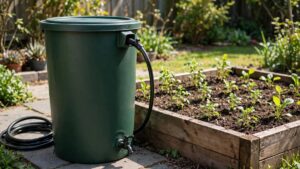
- Shape: urn profile with a flat back for sitting against the wall
- Top: self-draining planter top
- Inlet: meshed screen, sized by the maker for standard 3×4 and 2×3 downspouts
- Overflow: integrated overflow channel routed to the front, away from the foundation
- Spigot: solid brass, 3/4 in
- Material: BPA-free plastic resin with UV protection, per retailer listings
- Dimensions: about 35 × 26.5 × 25 in, 22 lb
- Expansion: linkable to a second barrel with a separately sold kit
- Warranty: 1-year limited warranty
The Rain Wizard Urn 65 is designed around the downspout in a way most barrels are not. The meshed screen on top is shaped to sit under the two standard residential downspout sizes, so the roof's output lands on the screen rather than splashing off a flat lid. When the barrel fills — and at a busy downspout it will — the integrated overflow channel carries the excess to the front of the barrel, away from the foundation wall it sits against; that single routing decision is the difference between harvested water and a damp basement wall. The flat back keeps the urn tight to the siding, the planter top drains itself so the planting does not drown, and the solid brass spigot is the fitting grade that survives years of hose threads. At 65 gallons it holds a useful buffer for a garden bed rotation, and the linking kit option means a second urn can double the system next season without replumbing the downspout.
Pros:
- Screen sized for both standard downspout dimensions
- Overflow routed to the front, away from the foundation
- Solid brass spigot and a flat-back, wall-hugging shape
- Linkable when one barrel proves too small
Cons:
- Linking kit is a separate purchase
- Planter top adds planting depth limits for larger herbs
- 65 gallons still fills quickly on a large roof plane
Graf Antique Amphora 158
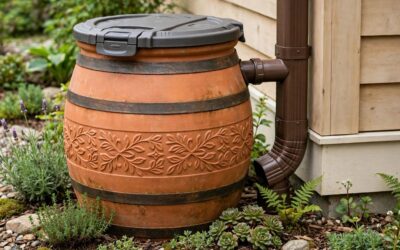
- Capacity: 158 gallons (600 L)
- Material: linear low-density polyethylene (LLD-PE), UV-stable
- Top: integrated planter
- System: closed, mosquito-resistant screened design
- Spigot: plastic fast-flow spigot, brass-colored
- Look: sculpted amphora form with an aged terracotta finish
- Brand: Graf, Germany, distributed in the US by Exaco
- Delivery: ships by LTL truck freight due to size
The Antique Amphora is the barrel for the gardener who has done the roof math and stopped believing in 50-gallon answers. A single inch of rain on a modest roof plane sends several hundred gallons down the spouts; at 158 gallons, this vessel holds what three ordinary barrels hold, in one footprint and with one downspout connection. Graf builds it as a closed system — the water enters through the screened top, the integrated planter dresses the rim, and the stored water stays dark and covered, which is the condition that keeps stored rainwater clean between storms. The fast-flow spigot is sized for filling cans quickly, a detail that matters when the can is being filled from a vessel this size several times a day. The honest costs are logistics and scale: it arrives by freight truck, it wants a level, solid pad, and a full vessel of this size is a fixture, not a barrel you move on a whim.
Pros:
- Largest capacity on this list by a wide margin
- Closed, screened system keeps stored water dark and covered
- UV-stable polyethylene in a terracotta-look finish
- Fast-flow spigot suits heavy daily can filling
Cons:
- Freight delivery and a prepared pad are part of the purchase
- Plastic spigot where others here fit brass
- A fixture at this size; placement mistakes are hard to undo
Graf Madera 58
- Capacity: 58 gallons (220 L)
- Material: UV-stable plastic with a brown wood-plank look
- Lid: removable cover with a child lock
- System: closed, mosquito-resistant design
- Access: open-top dipping for a watering can once the cover is lifted
- Brand: Graf, Germany, distributed in the US by Exaco
- Retail: sold through authorized US dealers such as Mulberry Greenhouses
The Madera answers a specific harvesting style: the gardener who waters by the can, dipping straight from the barrel. Its removable cover lifts off so a watering can goes in and comes out full, with no spigot queue and no hose — and the cover carries a child lock, so the open-top convenience does not leave an open vessel in a family garden. The wood-plank finish is molded into UV-stable plastic, which means the barrel look of a wooden cask without the staves, hoops, and eventual rot of a real timber barrel. As a closed, screened system it keeps the stored water covered between uses. At 58 gallons it sits in the middle of this list on capacity, and its gutter manners depend on the diverter or downspout arrangement the dealer supplies, so confirm the inlet hardware for your downspout size when ordering.
Pros:
- Removable lid allows direct watering-can dipping
- Child lock on the cover for family gardens
- Wood look without timber maintenance or rot
- Closed system keeps stored water covered
Cons:
- Mid-list capacity at 58 gallons
- Inlet hardware varies by dealer; confirm downspout fit
- Spigot specification is less detailed than the Good Ideas models
Good Ideas Impressions Stone 50 with Stand
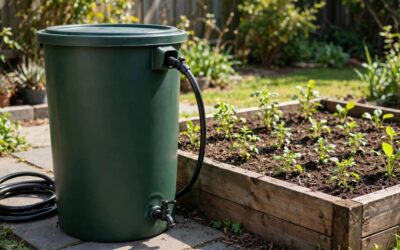
- Capacity: 50 gallons
- Finish: clay-stria texture in dark granite
- Top: planter top
- Inlet: meshed screen
- Spigot: brass, with two spigot locations — one for a hose, one for bucket filling
- Stand: included in the box as a two-piece set
- Material: plastic resin body
The Impressions Stone 50 is the smallest barrel here, and it earns its place on fittings rather than gallons. Two spigot locations solve the everyday annoyance of barrel use: the lower position fills a bucket or can with the barrel's full head of pressure, while the second serves a hose connection, so the hose can stay attached without blocking can filling. The brass spigot is the durable grade, the meshed screen handles the downspout's debris, and the planter top matches the rest of the Impressions line. The included stand is the quiet advantage — raising the barrel increases the water pressure at the spigot and lets a bucket slide underneath, and stands are an extra purchase with most barrels, including the other Good Ideas model on this list. For a single downspout serving a patio garden or a bed rotation near the house, 50 gallons on a stand is a complete, tidy system.
Pros:
- Two spigot locations for hose and bucket at once
- Stand included, raising pressure and bucket clearance
- Brass spigot and meshed screen fitted
- Decorative stone finish suits visible patio placements
Cons:
- Smallest capacity on this list at 50 gallons
- Stand adds assembly steps before first use
- No stated linking option for expansion
Curifurn 100 Gallon Collapsible Rain Barrel
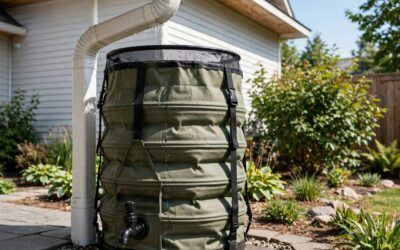
- Capacity: 100 gallons
- Material: 1000-denier Oxford fabric with a 3-layer PVC coating
- Temperature range: rated from −13°F to 113°F
- Frame: five reinforced internal support legs
- Top: mesh grid for debris filtering and overflow
- Kit: spigot and overflow kit with rubber seals included
- Storage: folds flat when empty
The collapsible entry solves the two problems rigid barrels cannot: shipping and storage. The Curifurn arrives folded, assembles on its five support legs, and holds 100 gallons — the second-largest capacity here — then folds away flat when the season or the tenancy ends, which makes it the natural pick for renters and for gardeners who harvest hard in a wet spring and want the corner back in winter. The top mesh grid filters debris and doubles as the overflow path, and the included overflow kit with rubber seals lets excess water be directed rather than spilled. The fabric is a heavy Oxford cloth with a PVC coating, rated across a wide temperature range. The trade-offs are inherent to fabric: it wants a level, smooth surface so the coating is not abraded, it will never have the decades-long rigidity of a molded barrel, and the spigot is a kit fitting rather than a molded brass fixture.
Pros:
- 100 gallons that fold flat for storage or moving
- Mesh top and overflow kit included
- Wide stated temperature range for shoulder seasons
- Light to position before filling
Cons:
- Fabric body needs a smooth, level base
- Kit spigot is not a brass molded fixture
- Long-term durability trails rigid molded barrels
Buying guide
Start at the roof, not at the barrel. The useful rule of thumb is that 1,000 square feet of roof sheds roughly 600 gallons in a one-inch rain, and a single downspout may carry a third to half of a roof plane. Against that supply, a 50-gallon barrel is a gesture and a 158-gallon vessel is a plan. Most gardens land in the middle: a 65-gallon barrel at the busiest downspout, linked to a second barrel when the first season proves the demand, holds a realistic buffer for beds and containers between storms. Size for the dry spell you are watering through, not for the storm you are collecting from — the barrel's job is to still have water on day six without rain.
Inlet and screen design decide how clean the stored water stays. The screen has two jobs: stop the leaf and grit load the roof sends down, and close the surface to mosquitoes. The Good Ideas screens are shaped for the two standard downspout sizes, 2×3 and 3×4 inches; measure your downspout before ordering anything, because a barrel whose inlet does not match the spout will splash, leak, and underfill. Closed systems like the two Graf designs keep the water dark and covered at all times, which slows algae growth in the stored water. Whatever the design, put screen cleaning on the calendar — a clogged screen in a storm diverts the whole roof's output down the wall.
Overflow is the feature owners forget until the first full barrel in a long rain. Once the vessel is full, the roof keeps delivering, and that water goes wherever the barrel's design sends it. The Rain Wizard Urn's channel routes overflow to the front, away from the foundation; the Curifurn's kit lets you attach a hose and choose the destination. If a barrel offers neither, the overflow spills at the inlet, beside the house — the worst place for it. Plan the overflow path to a bed, a gravel area, or a drain, and if barrels are linked, remember the link line becomes part of the overflow route.
Spigots and stands shape daily use more than capacity does. A brass spigot survives seasons of hose threads being screwed on and off; plastic kit spigots work but ask for gentler handling. Height is pressure: every foot the barrel sits above the spigot's outlet adds working pressure, and a stand also creates the clearance a bucket needs. The Impressions Stone includes its stand; for the others, a solid, level platform of blocks or pavers does the same job — and level is not optional, because a full 65-gallon barrel weighs well over 500 lb and a 158-gallon vessel far more, and that weight finds any tilt in the base.
Finally, place for the freeze and the future. In cold climates, rigid barrels should be drained and their spigots left open before hard freezes, or brought under cover; the collapsible Curifurn simply folds away. Leave working room at the downspout for the diverter or screen to be serviced, keep the barrel where its overflow cannot reach a path that freezes, and if there is any chance of a second barrel, choose a linkable model first — doubling a system that was designed to link is an afternoon's work, while doubling one that was not is a replumb.
FAQ
How big a rain barrel does one downspout need?
Bigger than most first purchases. A downspout draining even a quarter of a modest roof can deliver several hundred gallons in a one-inch rain, so any single barrel will fill in one good storm. The practical question is how much water the garden uses between storms: a bed-and-container rotation near the house is well served by 65 gallons, while a large vegetable garden argues for the 100 to 158 gallon class or two linked barrels. Buy for the dry spell, and let the overflow handle the storm.
Will a rain barrel screen fit my downspout?
Check the size before ordering. Residential downspouts are usually 2×3 or 3×4 inches, and the Good Ideas Rain Wizard Urn 65's meshed screen is made to accommodate both sizes. Other barrels use a round inlet, a diverter kit, or a lid opening whose fit depends on the arrangement supplied. Measure the downspout, read the inlet description on the product page, and if the fit is unclear, ask the seller — an inlet that does not match the spout splashes water down the wall instead of into storage.
Where does the water go when the barrel is full?
Wherever the overflow design sends it, which is why overflow deserves attention before purchase. The Rain Wizard Urn routes overflow through a channel to the front of the barrel, away from the foundation. The Curifurn's overflow kit accepts a hose so the gardener chooses the destination. Barrels without a directed overflow spill at the top, beside the house. Route overflow to a bed, gravel, or a drain — never let it pond against the foundation or across a path.
Can I connect two rain barrels together?
Some models are designed for it. The Rain Wizard Urn 65 is linkable with a separately sold kit, so a second barrel fills from the first through the link line and the pair behaves as one larger store at a single downspout. Linking is the cheapest capacity upgrade in rainwater harvesting because the downspout work is already done. If expansion is likely, choose a linkable first barrel; adding a non-linked second barrel means a second downspout or a diverter rearrangement.
Is a collapsible rain barrel durable enough for regular use?
For seasonal use, yes, with realistic expectations. The Curifurn's 1000-denier Oxford fabric with a three-layer PVC coating and five support legs is built for repeated filling, and it is rated across a wide temperature range. It asks for a smooth, level base so the coating is not abraded, and it will not match a molded barrel's decades of rigid service. Its advantages are real: it ships small, stores flat, and suits renters who cannot install permanent fixtures. Think of it as a strong seasonal vessel rather than a permanent one.
Does stored rainwater need any care between storms?
A little. Keep the screen clean so debris does not wash in or divert flow, and keep the stored water covered and dark — the closed Graf systems and screened tops here are designed for exactly that — because light and debris are what turn stored rainwater green and smelly. Draw water regularly so the store turns over, and in freezing climates drain rigid barrels before hard freezes. Rainwater from a roof is for the garden, not for drinking, and a clean, covered barrel keeps it in good condition for plants.
Conclusion
Gutter harvesting succeeds or fails at the fittings: the screen that matches the downspout, the overflow that leaves the foundation dry, the spigot that fills the can without a fight. The Rain Wizard Urn 65 gets all three right for a standard house and adds a linking path for later. The Graf Antique Amphora 158 is the answer when the roof math demands real storage, and the Graf Madera 58 serves the dip-the-can gardener in a wood-look closed system. The Impressions Stone 50 bundles its stand and dual spigot locations into the tidiest small system here, and the Curifurn 100 folds a genuinely large capacity into a renter-friendly package. Measure the downspout, plan the overflow, size for the dry spell — and the next storm becomes irrigation in storage.

Write Your Review
No reviews yet. Be the first to share your experience!