
Key takeaways
- Six wooden herb planters with hidden saucers for balcony herb gardens, each with a pull-out tray under the box, compared on size, soil volume, and the liner.
What's inside
As an Amazon Associate I earn from qualifying purchases. This post may contain affiliate links at no extra cost to you.
A balcony is the least forgiving place to water plants. There is no soil below to absorb a mistake, the boards or tiles show every stain, and the neighbour underneath inherits whatever drips through. That is why the saucer matters on a balcony, and why the neatest designs hide it: a tray that slides into the frame under the planting box, catching runoff out of sight and sliding out again for emptying, instead of a visible dish that overflows onto the floor. The shortlist for the best wooden herb planters with hidden saucers for balcony herb gardens is a focused one, because the feature is rare in wood: six elevated wooden planters, sold under six brands, that share a concealed pull-out water collection tray beneath the box.
Honesty about the field is part of the verdict. Wooden herb planters with a genuinely hidden saucer are not common, and the six here are close relatives: the same 48 by 23 in footprint at 31.1 in tall, the same three drainage holes, liner, tray, and lower shelf, offered by WOQWOQ, GDFSTUDIO, VAMOP, ACEPANO, LauKingdom, and HomeDIYer through major retailers. They differ in stated soil capacity, in how completely each retailer lists the specifications, in wood description, and in the small print, and those differences are what this comparison is built on. Every figure comes from a product page opened for this batch. Gardeners who want a different shape entirely should read the buying guide, which covers what to check when a planter hides its saucer some other way.
Quick verdict
All six planters hide the saucer the same way, as a pull-out tray beneath a 48 x 23 in elevated box on legs with a storage shelf, so the choice turns on specification detail. The WOQWOQ KO-742 lists the fullest spec set, including 5 cu ft of soil capacity. The GDFSTUDIO 201708 lists 4 cu ft and the clearest feature breakdown. The LauKingdom at Target is described in solid fir with the tray and liner spelled out. The HomeDIYer version publishes the most complete dimensions and weight table. The VAMOP ZZH102315 and the ACEPANO YLSXA220757 complete the set with the same tray design and their own listings to compare on finish and terms.
| Product | Key spec | Best for |
|---|---|---|
| WOQWOQ 48 in Elevated Garden Bed with Water Collection Tray KO-742 | 48 x 23 x 31.1 in, solid wood, 5 cu ft, pull-out tray | The fullest published specification of the tray design |
| GDFSTUDIO Natural Wood Rectangular Raised Bed with Water Collection Tray 201708 | 48 x 23 x 31.1 in, wood, 4 cu ft, pull-out tray, shelf | Clear feature listing and a stated shelf-and-liner package |
| LauKingdom 48 in Elevated Wood Raised Garden Bed with Water Tray | 48 x 23 x 31.1 in, solid fir, pull-out tray, liner, shelf | A fir build sold through a national retailer |
| HomeDIYer Raised Garden Bed 48 x 23 x 31.1 in with Pull-Out Tray | 48 x 23 x 31.1 in, solid wood, 29.76 lb, pull-out tray | The most complete published dimensions and weights |
| VAMOP Elevated Wood Raised Garden Bed with Water Collection Tray ZZH102315 | 48 x 23 x 31.1 in, solid wood, pull-out tray, liner, shelf | The same concealed tray with a storage-focused listing |
| ACEPANO 48 in Solid Wood Outdoor Planter with Water Collection Tray YLSXA220757 | 48 x 23 x 31.1 in, solid wood, 3 drainage holes, pull-out tray | A load-bearing emphasis in the same hidden-tray design |
How we chose
The keyword's terms were applied strictly. The planter had to be wooden, it had to be suited to herbs, and the saucer had to be hidden, meaning a tray or reservoir concealed within or beneath the planter's structure rather than a separate dish standing under a pot. That third test removed almost the whole wooden planter market: window boxes with liners but no tray, elevated beds that drain freely onto the floor, and wooden stands sold with loose saucers all failed it, however good they are otherwise. What passed, across several retailers, was one well-defined design sold under multiple brands, and the six entries are the six distinct branded models of it that could be verified on opened pages.
Within the six, the comparison looks for real differences: stated soil capacity, the completeness of each listing's specifications, wood description, shelf and liner details, and assembly information. Where a listing omits a figure, the entry says so, and no figure has been borrowed from one brand's page to fill another's. No prices appear in the article.
WOQWOQ 48 in Elevated Garden Bed with Water Collection Tray KO-742
- Model: KO-742
- Overall size: 48 x 23 x 31.1 in
- Material: solid wood, natural finish
- Soil capacity: 5 cu ft
- Drainage: 3 holes, with inner liner
- Saucer: pull-out tray beneath the planting area
- Assembly: fasteners and pre-drilled holes included
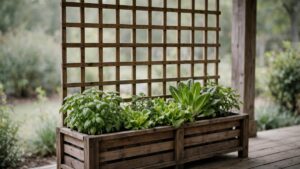
The WOQWOQ listing is the most completely specified version of this design, which earns it the lead position. The tray arrangement is described exactly: three drainage holes in the base of the box let water out of the soil, an inner liner keeps soil and moisture off the wood, and the pull-out tray beneath the planting area catches what drains, stopping dirt and debris from falling onto the storage shelf below and keeping tools stored there clean. On a balcony, that tray is the hidden saucer in working form, invisible in normal use, emptied by sliding it out after watering.
The stated soil capacity is 5 cu ft, the joint largest figure among the six listings, in a 48 x 23 in box standing 31.1 in tall, a working height the listing links to reduced bending at the balcony rail. Solid wood in a natural finish is the stated material. For a herb garden, the box plants as two or three rows: a row of basil and parsley along the sunny edge, chives and thyme where they can be snipped daily, and mint only in a buried pot of its own. Assembly is by the included fasteners into pre-drilled holes.
Pros:
- Fullest spec list of the six, including 5 cu ft capacity
- Tray, liner, and drainage all described in detail
- Solid wood with natural finish
- Shelf below stays dry and usable for tools
Cons:
- Design is shared with several other brands
- Natural unfinished wood will want a protective coat on an exposed balcony
- Box depth suits herbs and salads, not deep-rooted vegetables
GDFSTUDIO Natural Wood Rectangular Raised Bed with Water Collection Tray 201708
- Model: 201708
- Overall size: 48 x 23 x 31.1 in
- Material: wood, natural finish
- Soil capacity: 4 cu ft
- Drainage: 3 holes, with protective liner
- Saucer: pull-out water collection tray
- Features listed: drainage holes, liner, and shelf
The GDFSTUDIO listing presents the same concealed-tray design with a tidy, explicit feature set: effective drainage through 3 holes, a protective liner between soil and wood, a pull-out water collection tray that keeps the area clean, and a lower shelf for storage, all in a 48 x 23 x 31.1 in wooden unit. Its stated soil capacity is 4 cu ft, a cubic foot less than the WOQWOQ figure, a difference worth noticing because the two boxes share external dimensions; the gap most likely reflects how each seller measures fill, and it is a reminder to compare stated capacities rather than assume identical boxes hold identical volumes.
For balcony herb growing, 4 cu ft across a 48 in box is still a generous herb bed, enough for a full culinary row with room for a second sowing of fast crops like coriander and radish between the herbs. The listing's clarity is its strength: every feature the keyword asks about, wood, herbs, hidden tray, is named in plain terms on the page. Buyers comparing the six will find this the easiest listing to check line by line against the others.
Pros:
- Every key feature named plainly in the listing
- Stated 4 cu ft capacity for direct comparison
- Liner, tray, and shelf all included
- Full external dimensions published
Cons:
- Stated capacity is lower than a same-size rival
- Wood species not specified beyond wood
- Finish is natural, so weather protection is the buyer's job
LauKingdom 48 in Elevated Wood Raised Garden Bed with Water Tray
- Size: 48 x 23 x 31.1 in
- Material: solid fir wood per the listing
- Saucer: pull-out water collection tray
- Liner: protective inner liner
- Storage: bottom shelf
- Use listed: herbs, vegetables, fruits, and flowers
- Soil capacity: see product page
The LauKingdom version, sold through Target, is the one listing of the six that names its wood: solid fir, in a description that spells out the same water path as its rivals, a pull-out tray that keeps excess water from spilling, a protective liner that keeps soil from touching the wood and so extends the bed's outdoor life, and a bottom storage shelf. Fir is a sensible balcony wood, light for its strength, which matters when a filled planter may need to come off a balcony at the end of a tenancy or ahead of a storm.
The listing names herbs first among its uses, alongside vegetables, fruits, and flowers, and the 48 in box at standing height is well matched to a balcony herb garden that gets harvested daily. What the Target page does not state is a soil capacity, so that figure is marked see product page rather than assumed from the sister listings. For buyers who prefer purchasing through a national retailer with its own returns route, this is the natural channel for the design, and the tray, the feature this whole comparison turns on, is confirmed in the retailer's own description.
Pros:
- Wood species stated as solid fir
- Tray and liner described in the retailer's own words
- Herbs named first among listed uses
- Sold through a national retailer
Cons:
- Soil capacity not stated on the retailer page
- Same shared design as the other five
- Fir benefits from a finish coat for balcony weather
HomeDIYer Raised Garden Bed 48 x 23 x 31.1 in with Pull-Out Tray
- Size: 48 x 23 x 31.1 in assembled
- Material: solid wood, natural finish
- Weight: 29.76 lb; package 32.40 lb
- Drainage: 3 bottom holes, liner included
- Saucer: pull-out water collection tray
- Shelf load guidance: under 20 lb per the seller
- Assembly: pre-drilled, hardware included, 30-45 min per the seller
The HomeDIYer listing is the specification completist of the group. Beyond the shared design, 48 x 23 in planting area at 31.1 in tall, three drainage holes, liner, lower shelf, it publishes the figures the others leave out: an assembled weight of 29.76 lb, package dimensions and weight, and a working description of the tray, which slides horizontally beneath the planting box, catches the water that drains through the three base holes, and slides out for emptying. It also gives the shelf a sensible load note, under 20 lb, and an assembly estimate of 30 to 45 minutes with a screwdriver.
That weight figure is genuinely useful on a balcony, where the empty planter's weight is the part a buyer can plan around before soil and water are added. The seller's guidance on soil is also practical, pointing to a raised-bed blend of topsoil, compost, and perlite rather than dense garden soil. For a buyer who compares by published numbers, this listing offers the most of them, and its tray description is the clearest plain-language account of how the hidden saucer works across all six pages.
Pros:
- Publishes weight and package figures the others omit
- Clearest description of how the pull-out tray works
- Shelf load guidance included
- Soil blend guidance given by the seller
Cons:
- Sold through the brand's own store rather than a marketplace
- Shared design with five other brands
- Natural finish needs sealing for exposed balconies
VAMOP Elevated Wood Raised Garden Bed with Water Collection Tray ZZH102315
- Model: ZZH102315
- Size: 48 x 23 x 31.1 in
- Material: solid wood
- Drainage: integrated holes, protective inner liner
- Saucer: pull-out water collection tray underneath
- Storage: built-in shelf
- Assembly: pre-drilled holes, screws included
The VAMOP listing describes the design in its own terms: solid wood construction, a protective inner liner to shield the structure from moisture and soil, integrated drainage holes, and a pull-out water collection tray underneath that keeps excess water and debris off the balcony floor and doubles the unit's storage usefulness alongside the built-in shelf. The 31 in working height is presented, as in the sister listings, as the ergonomic centre of the design, and assembly is by pre-drilled holes with the full screw set included.
The VAMOP page is lighter on tabulated specifications than the WOQWOQ or HomeDIYer listings, with no soil capacity or weight in the record opened for this batch, so a buyer shortlisting by numbers should treat those as see product page items and weigh this version on its description and terms instead. What is confirmed on the page is everything the keyword requires: wood, an herb-suitable elevated box, and the concealed tray doing the saucer's work out of sight beneath the planting area.
Pros:
- Tray, liner, and shelf all confirmed in the listing
- Solid wood construction stated
- Pre-drilled assembly with screws included
- Standing-height working level
Cons:
- No soil capacity or weight in the opened listing record
- Shared design with five other brands
- Specification table thinner than rival listings
ACEPANO 48 in Solid Wood Outdoor Planter with Water Collection Tray YLSXA220757
- Model: YLSXA220757
- Overall size: 48 x 23 x 31.1 in
- Material: solid wood per the listing
- Drainage: 3 holes, with dedicated liner
- Saucer: pull-out tray under the planting area
- Assembly: full screw set, pre-drilled holes
- Soil capacity: see product page
The ACEPANO listing leads on structure, describing a durable build with strong load-bearing capacity, before detailing the familiar water path: three drainage holes to move excess water out of the soil, a dedicated liner isolating soil and moisture from the wood, and a pull-out tray under the planting area that catches the discharge, blocks debris from falling to the lower layer, and helps keep tools stored below clean. Load-bearing is a fair emphasis for this design, because a 48 in box of wet soil on legs is a real weight, and on a balcony the frame's sturdiness is a safety matter as much as a quality one.
The listing also covers upkeep plainly, noting that daily care is simple cleaning of the tray and surface dust, which is the honest maintenance profile of the whole design family: the tray that hides the saucer also has to be emptied and rinsed, or it becomes a hidden problem instead. Soil capacity is not stated in the opened record. As the sixth verified version of the design, the ACEPANO confirms how consistently this concealed-tray format is now sold, and gives buyers one more channel and finish to compare.
Pros:
- Load-bearing construction emphasised in the listing
- Full water path described: holes, liner, tray
- Tray also blocks debris from the storage layer
- Simple stated maintenance routine
Cons:
- Soil capacity not stated in the opened record
- Shared design with five other brands
- Heaviest claims need the buyer's own assembly care to hold
Buying guide
What counts as a hidden saucer
A hidden saucer is any runoff catcher that is part of the planter rather than a dish under it: a tray sliding into the frame beneath the box, a reservoir built into the base, or a recessed saucer that sits inside the planter's outline. The test is what a visitor sees and what the floor feels. If the catcher is invisible in normal use and the balcony floor stays dry when the planter is watered, the design qualifies. A loose saucer under a wooden box does the same plumbing job but fails the hidden test, and on a small balcony it also tends to overflow unnoticed, because nobody checks a dish they cannot see under a box.
Why this design repeats across brands
The six entries share a footprint and a feature set because the design is produced as a standard elevated planter and sold under many brand names through different retailers. That is common in this corner of the garden market, and it changes how to buy: the product decision is really about the channel, the stated specifications, and the terms, not about six different inventions. Compare the stated soil capacities, which differ between listings of the same box, check whether the wood species is named, and prefer the listing that publishes the most complete figures, because that completeness is the best available signal of what will actually arrive.
Sizing a balcony herb garden
A 48 x 23 in box is a full herb garden, not a windowsill strip. Planted in rows, it carries eight to twelve herb plants at working spacing: a row of basil through summer, parsley and coriander in rotation, chives and thyme as permanent residents, and a pot of mint sunk into the soil so its roots stay in bounds. The 31.1 in height puts the box at a comfortable picking level from a standing position and lifts the herbs into better light and air than floor level on most balconies, where the railing shades the first foot of space. Measure the balcony door swing and the usable floor run before ordering; the planter is long, and it should not have to be moved once filled.
Watering with a concealed tray
The tray changes watering technique in one important way: it hides the evidence. With a visible saucer, overflow is obvious; with a concealed tray, the first sign of overwatering is a tray that has filled and begun to drip at its edges. Water in smaller passes, wait for drainage, and slide the tray out to check its level until the routine is learned. Empty the tray after watering rather than leaving herbs standing in runoff, and rinse it every week or two, because a concealed tray that is never cleaned collects sediment and becomes a breeding spot for fungus gnats. In heavy rain, a balcony planter under no cover can fill its tray from above, so a quick check after storms belongs in the routine.
Wood care on a balcony
The liner in these planters is doing structural work, keeping wet soil off the wood, so it should be seated without tears and replaced if it splits. The wood itself, whether named as fir or listed simply as solid wood with a natural finish, lasts longer with an exterior finish or food-safe oil applied before the first fill and refreshed yearly, a job the sellers of these planters themselves recommend. Balconies concentrate weather: sun reflects off glass and walls, and wind dries one end of a box faster than the other, so rotating smaller planters and checking the dry end of a long box are worthwhile habits. At season's end, empty the tray, let the box dry, and store the planter under cover where the lease allows.
If the footprint does not fit
A 48 in planter is too long for some balconies, and the honest options are narrower formats with the same hidden-saucer idea rather than a long planter wedged across a door. Self-watering planters with concealed reservoirs, in resin or metal, apply the same principle at smaller sizes, and the wider planter market offers them in many footprints. What should not be compromised is the concealed catcher itself: on a balcony over another home, a planter that drains freely onto the floor is a neighbour problem waiting for its first heavy watering, whatever its size.
FAQ
How does a pull-out tray work as a hidden saucer?
The planting box has drainage holes in its base. Water that the soil cannot hold drains through those holes and lands in a tray that slides into the frame directly beneath the box, hidden by the planter's legs and apron. The tray catches the runoff before it reaches the shelf or the balcony floor, and it slides out by hand for emptying and rinsing. In the six listings here, the tray sits above a storage shelf, so it also keeps stored tools dry, which a simple saucer under a pot never does.
Are the six planters in this list the same product?
They are the same design, sold under six brand names through different retailers, with the same 48 x 23 x 31.1 in dimensions, three drainage holes, liner, pull-out tray, and shelf. The listings differ in stated soil capacity, in whether the wood species is named, in how complete the published specifications are, and in each retailer's terms. That is why the comparison concentrates on those differences rather than pretending the six are six different inventions, and why the buying decision is mostly about which listing and channel a buyer trusts.
Why are there not more wooden planters with hidden saucers?
Because wood and standing water are uneasy partners, most wooden planters are designed to drain freely and keep the wood dry, which means runoff leaves the planter entirely. Concealing a water tray inside a wooden frame asks for a liner to protect the wood and a tray that owners will actually empty, and most makers choose simpler drainage instead. The concealed-tray design in this list is the notable exception at this size, which is why one design, well distributed, makes up the verified field.
How many herbs fit in a 48 inch planter box?
At working spacings, eight to twelve plants. A practical layout is a back row of taller herbs such as rosemary or a potted mint, a middle row of basil and parsley, and a front edge of thyme and chives where they can be snipped without reaching. Fast crops such as coriander and radish fill gaps between slower herbs early in the season. The stated soil capacities of 4 to 5 cu ft in these listings are enough for that planting without crowding roots.
Will the tray overflow damage the balcony floor?
It can if it is never emptied, which is the one discipline this design asks for. A tray checked after watering and after heavy rain will not overflow in normal use, because its job is to catch the modest runoff from a single watering, not to store water. Gardeners who travel should ask a neighbour to check the tray along with the watering, and in very wet spells the planter can be moved under the balcony's covered section if it has one. The floor risk from a maintained tray is far lower than from a planter with no catcher at all.
Does the liner need replacing?
Eventually, yes. The liner sits between wet soil and wood for the whole season, and it will stiffen, tear at the corners, or split along folds over time. A split liner lets soil and water reach the wood directly, which shortens the planter's life, so the liner should be inspected whenever the box is emptied and replaced when it no longer seats cleanly. Replacement liners for a 48 x 23 in box are a standard garden-centre item, and fitting one is a few minutes' work during a replant.
Conclusion
For a balcony herb garden, the hidden saucer is the feature that decides whether watering is a pleasure or a problem with the neighbours, and in wood the verified field is one good design sold six ways. The WOQWOQ KO-742 publishes the fullest specifications, the GDFSTUDIO 201708 the clearest feature list, the LauKingdom names its fir, and the HomeDIYer listing adds the weights and tray detail the others omit, with the VAMOP and ACEPANO versions completing the set through their own channels. Choose by the completeness of the listing and the retailer's terms, keep the tray emptied and rinsed, finish the wood before the first fill, and a 48 in box of herbs at standing height will give a balcony a full culinary garden with a dry floor under it.




Write Your Review
No reviews yet. Be the first to share your experience!