
Key takeaways
- Five steel landscape edging kits under the band for gravel walkways, comparing gauge, height, coverage, steel type and joining hardware in full detail here.
As an Amazon Associate I earn from qualifying purchases. This post may contain affiliate links at no extra cost to you.
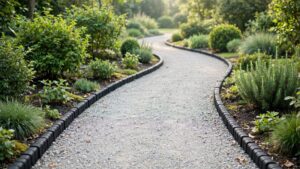
A gravel walkway only looks crisp as long as something holds the gravel in its lane. Without a firm edge, stones migrate into the lawn with every footstep and every mower pass, the path narrows and bulges, and the line between walkway and garden dissolves within a season or two. Steel edging is the fix that lasts: thin enough to disappear into the design, stiff enough to hold a straight or curved line against shifting stone, and durable enough to stay in the ground for years. The best steel landscape edging under 150 for gravel walkways shares a few traits — enough height above ground to contain loose stone, a way of joining sections into one continuous run, and a finish that can live outdoors — but the kits differ in steel type, strip height, and how they anchor, and those differences decide which one suits a given path.
Every kit on this list was checked against its maker's listing or a retailer's full product page, and every one sits inside the price band named in the keyword, with the band checked on the page where the kit is sold. What the list compares is the working specification: strip length and total coverage, height above and below ground, steel type and gauge where the maker states it, and the hardware that joins one strip to the next. Gravel makes two demands that mulch beds do not. The edging must stand high enough above the path base to keep stone from washing or kicking over the top, and it must hold its line under the lateral pressure of gravel, which pushes outward constantly rather than only when it is walked on.
Quick verdict
For a premium, long-lasting edge, the Edge Right hammer-in strips are the standout: 48-inch COR-TEN steel sections with a rounded top and serrated teeth, sold as a five-pack that covers 20 feet. The BIRDROCK HOME five-pack is the heavy-gauge alternative, with 16-gauge panels and a gunmetal finish in a no-dig format. The Sunnydaze scalloped set is the decorative pick, trading a straight top line for a scalloped profile with spikes and locking ends. The WORTH Garden 33 ft kit is the coverage value, with the longest run in one box and the most joining hardware. The GZGNEEVL Corten set is the tall pre-rusted option, with 8-inch panels that arrive with their weathered finish already formed.
Comparison table
| Product | Key spec | Best for |
|---|---|---|
| Edge Right Hammer-In Edging 6-Inch 5-Pack | Five 48-in COR-TEN strips; 20 ft; 1/4-in rounded top | Long, straight runs with a weathering steel finish |
| BIRDROCK HOME Edging Border 5-Pack 40 x 6 in | 16-gauge panels; 16.7 ft; gunmetal finish | Heavy-gauge panels in a no-dig format |
| Sunnydaze Scalloped Steel Edging 16 ft 5-Pack | Five 42 x 7 in sections; locking ends; bottom spikes | Decorative edges along curved paths |
| WORTH Garden Metal Edging 33 ft (K649G01) | 33 ft installed; 11 clamps; 2 in above ground | The longest run and most hardware in one kit |
| GZGNEEVL Corten Steel Edging 8-Inch 6-Pack | Six 40-in panels; 20 ft; 16-gauge pre-rusted Corten | Tall edging with the patina already formed |
How we chose
We read the maker's listing or the retailer's product page for every kit here, and we recorded the price shown on that page to confirm each kit sits inside the band; prices appear only in our research notes, never in this article. We kept only steel edging — no plastic, resin, or aluminum — because the keyword asks for steel and because gravel's constant outward push punishes flexible materials. We compared the dimensions that decide fit along a walkway: how much of the strip stands above ground to contain stone, how much sits below ground to anchor it, and how the total coverage in the box compares with a typical path length. We noted the joining method for each kit, since a walkway edge is only as straight as its weakest joint, and we spread the picks across steel types — weathering Corten, powder-coated galvanized, and finished panel steel — so the list covers the real choices a buyer faces rather than five versions of one kit.
Edge Right Hammer-In Landscape Edging, 6-Inch 5-Pack
- Strips: five 48-in strips, 20 ft total
- Steel: COR-TEN weathering steel
- Depth: 6 in
- Top: 1/4-in rounded top edge
- Anchor: serrated teeth along the bottom edge
- Install: hammer-in
- Pack weight: 27.2 lb
Edge Right builds its edging around the longest individual strips on this list. Each 48-inch section covers four feet of path, so a 20-foot run takes five pieces and only four joints, and fewer joints mean fewer places for the line to wander. The steel is COR-TEN, the weathering alloy that forms a stable rust-colored surface layer outdoors; the maker notes there is no paint to chip and that the surface can be sealed if the owner prefers to hold its color. The top edge is rounded at a quarter inch, which gives the exposed line a finished, slightly softened profile instead of a raw cut edge, and the bottom edge carries serrated teeth that bite into the soil as the strip is hammered in, resisting the slow creep that gravel pressure causes. The maker's install guidance puts the strip two to three inches deep in most soils, deeper if you want more of the six inches buried, which lets the installer choose how much steel stands above the path to hold stone back. At 27.2 lb for the pack, this is a substantial kit that feels rigid in the hand rather than floppy.
Pros: Longest strips here, so the fewest joints per run; weathering steel needs no paint or coating upkeep; rounded top gives a finished exposed edge; teeth grip the soil against lateral pressure.
Cons: The rust patina develops over time, so the color changes during the first seasons; weathering steel can mark light stone or paving while the surface stabilizes, so placement beside pale gravel deserves thought; a five-pack covers 20 ft, so long paths need multiple packs.
BIRDROCK HOME Landscape Edging Border, 5-Pack 40 x 6 Inch
- Panels: five 40 x 6 in panels, 16.7 ft total
- Steel: 16-gauge metal panels
- Finish: gunmetal
- Install: no-dig format
- Profile: 6 in tall
The BIRDROCK HOME set is the panel-format entry on this list, and its listing leads with the gauge: 16-gauge metal, a thickness the maker presents as the sturdy alternative to plastic edging. Five panels of 40 by 6 inches join into 16.7 feet of edge, a size aimed at a single path side, a short walkway, or one long bed edge rather than a whole garden. The six-inch height splits between buried anchor and exposed face, and the exposed portion is what holds gravel in its lane along a walk. The gunmetal finish gives the steel a dark, muted tone that sits quietly against gray and brown gravels, and because the finish is part of the product as sold, there is no weathering period before the color settles. The no-dig format suits walkways laid over compacted ground where trenching a deep slot is awkward: the panels set along the line and hold the stone back from the surface down. For a short, visible run where the edge itself is part of the look — a front path, a courtyard walk — the combination of gauge and finish is the argument.
Pros: 16-gauge panels are the stiff, weighty option in this group; gunmetal finish looks settled from day one; panel format handles short runs neatly; six-inch height contains standard gravel depths.
Cons: 16.7 ft is the shortest coverage here, so longer paths need several packs; the no-dig format anchors less deeply than hammer-in strips on loose ground; the dark finish shows dust and pale gravel scuffs more than a rust tone would.
Sunnydaze Heavy-Duty Steel Scalloped Landscape Edging, 16 ft 5-Pack
- Sections: five 42 x 7 in sections
- Connected length: 16.7 ft
- Profile: scalloped top edge
- Steel: flexible steel construction
- Anchor: spikes along the bottom of each section
- Joining: locking system on both ends of each section
- Colors: brown, gray, and green
The Sunnydaze set is the one pick here that makes the top edge itself decorative. Each 42-inch section is cut with a scalloped top, so the finished border reads as a repeating curve rather than a straight steel line — a look that suits cottage-style paths and curved walkways where a hard modern edge would jar. Under the decoration, the working details are sound: spikes run along the bottom of each section to hold it in the ground, and a locking system on both ends joins section to section, so the run behaves as one piece instead of five. Connected, the pack makes 16.7 feet. The steel is described as sturdy and flexible, which is the combination a curved path needs: stiff enough to hold a line against gravel, limber enough to follow a bend without kinking. At seven inches, the sections are among the taller picks here, and the extra height can stand a little prouder of the gravel surface for a more visible border. Three color options let the edge blend with soil, stone, or planting.
Pros: Scalloped profile suits curved and cottage-style paths; locking ends make the run act as one piece; bottom spikes anchor each section; three colors to match the setting.
Cons: The decorative top is a matter of taste and will not suit crisp modern designs; coverage matches the shorter kits here; flexibility that helps on curves takes more care to keep dead straight on long runs.
WORTH Garden Metal Landscape Edging, 33 ft 10-Pack (K649G01)
- Strips: ten 40-in strips, 33 ft installed
- Height: 4.5 in, with 2 in above ground as listed
- Teeth: 2.5-in saw teeth along the bottom
- Hardware: 11 clamps, plus clips and gloves in the box
- Steel: galvanized steel with black powder coating
- Install: hammer-in, bendable strips
- Model: K649G01
The WORTH Garden kit is built around coverage and hardware. Ten 40-inch strips install to 33 feet — the longest single-box run on this list — and the box carries the joining gear to match: 11 clamps, clips, and a pair of gloves for handling cut steel edges. The strips are galvanized steel with a black powder coating, so the corrosion protection comes from the zinc layer under a dark finish that reads as a clean shadow line beside gravel. The listing is unusually specific about installed geometry: 4.5 inches of strip height, with 2 inches standing above ground and 2.5-inch saw teeth driven below it. Two inches of exposed steel is a low, quiet profile — enough to hold a standard gravel layer in place without the edge becoming a visual feature — and the teeth give the buried portion its grip. The strips bend, so the same kit can run a straight path edge and then curve around a planting island. For a long walkway with two sides to edge, one box goes further here than with any other pick.
Pros: Longest coverage in one box; the most joining hardware here, with gloves included; installed above-ground height is stated plainly; black finish makes a discreet line.
Cons: Two inches above ground is the lowest exposed face here, so deep gravel layers can overtop it; thinner, bendable strips need care to keep a long straight run true; the powder coat can chip at cut ends if strips are trimmed.
GZGNEEVL Corten Steel Landscape Edging, 8-Inch 6-Pack
- Panels: six 40-in panels, 20 ft total
- Height: 8 in
- Steel: 16-gauge Corten steel, pre-rusted
- Hardware: 6 clips included
- Install: hammer-in, no-dig format
The GZGNEEVL set is the tall, heavy-gauge Corten option. Its six panels stand 8 inches high — the tallest profile here — in 16-gauge Corten steel, and they arrive pre-rusted, so the warm weathered color is present from the day of installation rather than developing over the first year. Height is the working argument along a gravel walkway: eight inches of panel can be set deep for anchorage and still leave a tall exposed face, which suits paths where the gravel layer is deep, the ground slopes, or the walkway edge doubles as a low retaining line against a bed. The listing describes a hammer-in, no-dig installation with six clips to join the panels, and the bendable format follows curved borders as well as straight ones. Against the Edge Right strips, the trade is clear: this kit gives more height and gauge with the patina ready-made, in shorter 40-inch panels, while Edge Right gives longer individual strips whose finish matures in place. Both are weathering steel, so the same placement care applies beside pale stone while the surface settles.
Pros: Tallest panels here for deep gravel or sloping edges; 16-gauge steel with the patina already formed; clips included for joining; works on curves as well as straight runs.
Cons: Pre-rusted surfaces can leave rust marks on hands, gloves, and light stone during handling and early weathering; 40-in panels mean more joints than the 48-in strips; the bold rust tone is a strong design statement that not every path wants.
Buying guide
Measure the path before anything else, and measure both sides. Edging coverage is sold by the box, and the totals here run from about 16.7 feet to 33 feet; a 20-foot walkway needs roughly 40 feet of edging for both edges, which is two boxes of most kits on this list or one and a fraction of the longest. Buying by the measured run, with a little spare for cuts and mistakes, avoids a half-finished edge waiting on a second delivery.
Height is the next decision, and it splits into two numbers: how much steel stands above the path base and how much anchors below it. Gravel is usually laid two to three inches deep, so the exposed face should at least match that depth or stone will creep over the top. Where a listing states the above-ground height, as the WORTH Garden kit does, use it; where it does not, read the total height as the sum of both parts and plan to bury at least half. Taller panels, like the 8-inch GZGNEEVL set, give the installer freedom to choose the split; shorter strips fix the split for you.
Steel type decides the long-term look. Weathering steels — COR-TEN and Corten — form a rust surface that becomes the finish; they ask for no coating upkeep, but the color evolves, and early runoff can mark pale gravel or light paving, so they suit darker stone and planted edges best. Powder-coated galvanized steel starts finished and stays that color, with the zinc layer under the coating doing the corrosion work; it suits crisp designs and light gravel, at the cost of a coating that can chip at cut ends. Gauge runs the other way from intuition: a lower gauge number means thicker steel. The 16-gauge panels here are the stiff, weighty end of the range, while thinner bendable strips trade rigidity for easy curving.
Finally, look at the joining hardware. A walkway edge is a chain, and clamps, clips, and locking ends are what keep adjoining strips at the same height and line under gravel's constant push. Kits that include the hardware in the box, and gloves for the cut edges, save a second purchase and some skinned knuckles.
FAQ
How tall should edging be for a gravel walkway?
The exposed face should at least match the depth of the gravel layer, which is commonly two to three inches, or stone will migrate over the top. The kits here stand from 2 inches above ground, on the WORTH Garden set, to taller splits available from the 6-inch and 8-inch strips and panels. On sloping paths, choose extra height: gravel creeps downhill, and the low side of a slope needs the taller face.
Will Corten steel stain my gravel?
Weathering steel forms its rust surface outdoors, and during the early period some rust color can wash onto whatever sits against it. Beside pale gravel or light paving, that can leave marks while the surface stabilizes. Darker gravel hides it almost entirely, and many owners accept a season of settling as the price of a finish that then needs no upkeep. If the path uses very light stone and must look clean from day one, a powder-coated galvanized kit is the safer match.
Can steel edging follow a curved path?
Yes, within limits. The bendable strip kits here — the WORTH Garden and Sunnydaze sets among them — flex along their length and follow gentle curves, and the panel kits can step around a bend in short sections. Tight corners are harder: a strip bent too sharply kinks rather than curves, so lay the line out first and use the shortest sections on the tightest bends.
Do I need to dig a trench to install these kits?
Most of the kits here are hammer-in or no-dig designs that set into a shallow slot or directly along the line, rather than a dug trench. In practice, scoring a shallow line with a spade where the edge will sit makes hammering easier and keeps the top line even, especially in compacted ground beside a path. The maker's stated install depth, where given, is the guide: Edge Right, for example, lists two to three inches deep in most soils.
How much edging should I buy for a typical walkway?
Measure the full length of every edge the gravel touches — both sides of the path, plus any border where the walk meets a bed or a lawn — and add roughly ten percent for cuts, joints, and mistakes. Compare that figure with the installed coverage on the box, not the strip count: the kits here cover from about 16.7 feet to 33 feet per box, and installed coverage is the number that decides how many boxes the path takes.
Conclusion
Steel edging earns its place along a gravel walkway by holding a line that gravel, feet, and weather are always trying to blur. The five kits here divide the choices cleanly: Edge Right for long strips and a maturing weathering finish, BIRDROCK HOME for heavy-gauge panels in a settled gunmetal tone, Sunnydaze for a scalloped profile on curved paths, WORTH Garden for the longest run and fullest hardware box, and GZGNEEVL for tall pre-rusted panels where the edge must also hold back depth. Match the exposed height to your gravel depth, the steel type to your stone color, and the coverage to a measured run, and the path will keep the crisp outline that makes gravel look intentional rather than spilled.
Write Your Review
No reviews yet. Be the first to share your experience!