
Key takeaways
- Compare hanging planters for small apartment balconies, covering self-watering reservoirs, weight limits, drainage and recycled materials within the budget.
As an Amazon Associate I earn from qualifying purchases. This post may contain affiliate links at no extra cost to you.
A small apartment balcony imposes rules that a garden never does. The hook or rail above carries real weight limits, the balcony below belongs to a neighbour who did not agree to be watered, the building may forbid drilling into the facade, and every plant competes for the same few feet of sunny edge. The best hanging planters under 300 for small apartment balconies are the ones designed inside those rules: self-watering reservoirs that stretch the days between waterings and keep drips off the railing, honest weight ratings an owner can check against a hook's limit, sizes that suit a railing run or a single sunny corner, and materials that survive sun and weather on an exposed ledge several floors up.
The five planters in this roundup approach the problem from five directions. One hangs its plants upside down from an internal reservoir, so nothing drips at all. One strings three pots along a rod that mounts on a wall or ceiling without touching the railing. One is a long recycled trough that can hang or sit on a rail. Two are self-watering baskets at the simplest end of the market, one with a hidden reservoir under a soil disk and one with an attached basin the roots drink from directly. Every model here was verified on an opened product or retailer page, and every one sits within the budget in the keyword, with the price evidence kept in the research notes rather than in this article.
A balcony note before the picks: weigh a planter wet, not dry. Soil and a full reservoir can double or triple the hanging weight, and the ratings quoted below, where the maker lists them, are the numbers to compare against the hook, bracket, or rail that will actually carry the load.
Quick verdict
The Boskke Sky Planter Recycled is the most balcony-friendly design here: it hangs plants upside down, feeds them from an internal reservoir, and is built not to drip on the neighbours below. The Umbra Triflora is the best use of a sunny wall or window, three pots on one rod with adjustable cords and mounting hardware included. The Ecopots Hanging Bruges is the durable long trough for a railing run, with a ten-year warranty. The Bloem Dura Cotta basket is the classic hanging basket made self-watering with a hidden reservoir, and the Bloem Lucca basket is the simplest self-watering option, with an attached basin and a snap-lock saucer that stays put in wind.
Comparison table
| Product | Key spec | Best for |
|---|---|---|
| Boskke Sky Planter Recycled, Medium | Upside-down planter, Slo-Flo internal reservoir | Zero-drip hanging over shared spaces |
| Umbra Triflora Hanging Planter, Set of 3 | Three pots on a rod, 15 lb total rating | Sunny walls and windows without rail mounting |
| Ecopots Hanging Bruges 21 in | 21 inch recycled trough, built-in drainage | Long railing runs and herb rows |
| Bloem Dura Cotta 12 in Hanging Basket | Hidden reservoir, self-watering disk | Classic basket shape with less watering |
| Bloem Lucca 13 in Self-Watering Hanging Basket | Attached basin, snap-lock saucer | Simple self-watering on exposed balconies |
How we chose
The first filter was the budget in the keyword, verified on an opened page for every model, because a balcony roundup that drifts above its own price band is useless to the renter it claims to serve. The second filter was water behaviour. On a balcony, watering is a logistics problem: reservoirs that hold water inside the planter, disks that keep soil above a hidden water store, and basins that feed roots from below all reduce both the frequency of watering and the chance of runoff spilling over the edge onto the balcony below.
Weight honesty came third. Makers that state a load rating, a planter weight, or a reservoir capacity give the buyer something to check against a hook or rail limit, and those models were favoured. Fourth was mounting flexibility. Balcony rules vary wildly between buildings, so the set deliberately mixes ceiling-hung, wall-mounted, and railing-friendly designs, including one planter that never touches the railing at all. Finally, materials had to suit an exposed ledge: UV-resistant and frost-resistant bodies, recycled content where the maker states it, and warranties that suggest the planter is expected to live outdoors for years rather than a single summer.
Boskke Sky Planter Recycled, Medium
- Design: Upside-down hanging planter for herbs and flowers
- Material: 100 percent recycled plastic, as listed by the maker
- Watering: Slo-Flo internal reservoir feeds the roots directly
- Indicator: Green float stick shows the water level
- Plant security: Locking disc holds the plant and soil in place
- Use: Home, office, and outdoor settings
The Sky Planter is the strangest object in this roundup and, for an apartment balcony, arguably the cleverest. The plant grows downward out of the bottom of the pot, held by a locking disc that keeps soil and plant secure, while a Slo-Flo reservoir inside the body feeds water to the roots from above them. Because the water lives inside the planter and is delivered internally, the design is effectively non-drip in normal use, which makes it the one planter here that can hang over a neighbour's balcony, a walkway, or the building's facade without a saucer negotiation.
The recycled plastic body keeps the hanging weight low, and the green float stick that rises from the top reports the reservoir level at a glance, so watering becomes a weekly check rather than a daily guess. Herbs are the natural planting: basil, mint, and trailing rosemary all grow happily toward the light, and a row of two or three Sky Planters under a balcony ceiling makes a small hanging herb garden that uses no floor or railing space at all. It is a single-plant planter, so it suits gardeners who think in specimens rather than drifts of colour.
Pros: Internal reservoir means no dripping below; float stick shows water level clearly; recycled body keeps hanging weight low.
Cons: One plant per planter; the upside-down habit takes a season to look natural to some eyes.
Umbra Triflora Hanging Planter, Set of 3
- Format: Three pots strung on a metal rod
- Fit: Holds standard 3 inch nursery pots
- Load rating: Up to 15 pounds total, 5 pounds per planter, as listed by the maker
- Mounting: Wall or ceiling, hardware included
- Dimensions: 25 by 5.75 by 43.5 inches overall, sized for a standard 24 inch window
- Material: Recycled molded polypropylene with recycled wood fiber
The Triflora solves the balcony problem by refusing to use the railing. Its three pots hang from a metal rod that mounts to a wall or ceiling, so it suits balconies where the rail is off-limits, too flimsy, or already full, and it fits across a standard twenty-four-inch window, which makes it as useful inside a sunny apartment as outside it. The cords slide along the rod and adjust in length, so the three pots can hang level, staggered, or spaced to follow the light, and because the pots hold standard three-inch nursery pots, replanting is a lift-out swap rather than a messy transplant.
The stated load rating, fifteen pounds across the set, is the kind of honest number balcony gardeners need, and the included hardware removes the usual second trip to the store. Umbra lists the set for indoor use, noting that a drainage hole can be drilled for outdoor planting, which is worth respecting: on a balcony, undrained pots waterlog in a storm, so the drill-or-indoors choice should be made deliberately. A manufacturer warranty of five years is listed for the set through the maker's retail channels.
Pros: Wall or ceiling mounting keeps the railing free; adjustable cords and spacing; honest per-pot weight rating with hardware included.
Cons: Pots are sized for three-inch nursery plants; drainage for outdoor use needs a drilled hole.
Ecopots Hanging Bruges 21 in
- Length: 21.6 inches long, 7.9 inches wide, 8 inches high
- Weight: 7.7 pounds empty
- Material: Recycled material, as listed by the retailer
- Drainage: Built-in drainage
- Resistance: Frost-resistant and UV-resistant
- Warranty: 10 years, as listed by the retailer
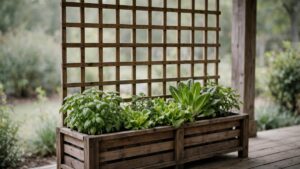
The Bruges is the planter for the balcony's long edge. Its twenty-one-inch trough holds a proper row, herbs in a line, a drift of trailing petunias, or salad leaves in succession, and it can hang or rest in a railing placement, which gives the owner two mounting answers to whatever the building allows. The recycled body carries the matte, stone-like finish Ecopots is known for, so it reads as a design object rather than a plastic tub, and at under eight pounds empty it is manageable to lift down for replanting even by one person working in a narrow space.
Built-in drainage separates it from decorative troughs that drown roots in the first thunderstorm, and the frost and UV resistance, backed by a ten-year warranty as listed by the retailer, suits a planter that will live outside through every season a balcony can produce. The base length is a little shorter than the rim at twenty inches, worth knowing when measuring a bracket or stand. For a renter who wants one substantial planter rather than a cluster of small ones, the Bruges is the anchor piece of this roundup.
Pros: Long trough suits herb rows and trailing displays; built-in drainage; ten-year warranty and frost resistance.
Cons: One long planter is a bigger single load to hang than several small pots; the recycled finish shows soil splashes more than gloss plastic.
Bloem Dura Cotta 12 in Hanging Basket
- Size: 12.5 inches top width, 6.75 inches high
- Soil capacity: 1.5 gallons
- Watering: Hidden reservoir with a self-watering disk
- Drainage: Removable drainage plugs, sealed bottom option
- Hanger: Matching macramé cord included
- Material: UV-stabilized resin with a terracotta appearance
The Dura Cotta is the familiar hanging basket, rebuilt for people who cannot water daily. Inside the basket, a self-watering disk holds the potting mix above a hidden reservoir, and porous channels filled with soil wick water upward so the mix stays evenly moist; the retailer lists the reservoir depth at roughly one to two and a half inches depending on size. The bottom can stay sealed, which keeps a balcony floor dry and suits indoor hanging, or the removable plugs can be taken out for outdoor drainage, a small piece of flexibility that matters when the same basket moves between a summer balcony and a winter window.
The resin body copies the look of clay without clay's weight or its habit of chipping and cracking, and the UV-stabilized material is listed as fade resistant. It arrives with a matching macramé cord for hanging, so it goes from box to hook in minutes on a wall bracket or ceiling hook. At a listed weight of about a pound empty, the wet weight stays modest, which keeps it inside the comfort zone of most balcony brackets.
Pros: Hidden reservoir stretches watering intervals; sealed or drained bottom by choice; light resin with a clay look.
Cons: Twelve-inch size suits one feature plant or a small grouping, not a large display; macramé cord will weather before the basket does.
Bloem Lucca 13 in Self-Watering Hanging Basket
- Size: 13 inches diameter
- Watering: Attached basin reservoir, roots drink from below
- Saucer: Attached saucer with a snap-lock fit
- Material: UV-stabilized, BPA-free plastic, as described for the Lucca line
- Establishment: Water from the top for the first weeks until roots reach the supply
The Lucca takes the other classic self-watering route: an attached basin under the basket that the owner fills with water, which the plant's roots tap into directly once they grow down to it. Bloem's guidance for the line is to water from the top for the first three to four weeks while the root system establishes, then keep the tray filled and let the plant drink as needed, refilling when the tray runs dry. On a balcony, that rhythm turns watering into a quick tray check every few days instead of a daily soaking with a can held over the railing.
The attached saucer locks onto the basket rather than hanging loose, which keeps it from detaching and spilling in the gusts that exposed balconies collect, and the UV-stabilized, BPA-free plastic keeps its colour in direct sun. The Lucca family is made in the USA, and the thirteen-inch basket is sized for a single generous planting, a fern, a trailing geranium, or a mixed handful of herbs. It is the simplest mechanism in this roundup, which is its own virtue: nothing to program, nothing to clog, and a water store the plant meters out itself.
Pros: Basin watering is simple and spill-resistant; snap-lock saucer stays attached in wind; UV-stabilized plastic holds its colour.
Cons: Roots need a few weeks of top watering before the basin takes over; basin capacity is modest in a heatwave.
Buying guide
Start with the load path. Find out what the planter will hang from, a ceiling hook into structure, a wall bracket, or the railing itself, and what that fixing can honestly carry. Then weigh the planter as it will actually hang: body, wet soil, plants, and a full reservoir. Makers that state a load rating or an empty weight, as several here do, make that arithmetic possible; where no rating is stated, keep the planting small and the hook conservative.
Decide how the building feels about water. In many apartment blocks the real rule is not about planters but about drips. Self-watering designs with internal reservoirs, sealed bottoms, or attached basins keep water inside the planter, and an upside-down planter removes the drip question entirely. If the chosen design drains freely, hang it where its runoff lands on the owner's own balcony floor, over a tray, rather than over the rail.
Match the watering system to the owner's calendar. A hidden reservoir under a soil disk suits plants that like steady moisture and owners who travel for long weekends. A basin system suits deep-rooted plants that can be trusted to drink at their own pace. A row of small pots on a rod suits herbs and succulents that prefer to dry between waterings and be swapped out individually when one fails. The wrong pairing, a thirsty fern in a tiny pot, a succulent over a reservoir, fails slowly and then all at once.
Measure the sunny edge, not the whole balcony. Most small balconies have one run of rail or one wall that gets real light, and the planter should be sized to that run: a twenty-one-inch trough for a herb row, a three-pot rod across a window, or a pair of baskets flanking a door. Hanging everything in the single sunny strip and keeping the shaded strip for storage is the layout that survives the season.
Finally, plan for storms and winter. Balconies several floors up take wind that ground gardens never meet, so cords, rods, and snap-lock parts should be checked at the start of the season, and planters should have a plan for the worst forecast of the year, even if the plan is simply lifting them down. Frost-resistant bodies can stay out; reservoirs should be emptied before a hard freeze wherever the maker does not state otherwise.
FAQ
How much weight can a balcony hook or railing actually carry?
It varies with the building and the fixing, which is why the planter's own numbers matter. Compare the maker's stated load rating or empty weight against the hook or bracket rating, and always calculate with wet soil and a full reservoir. When in doubt, choose several lighter planters over one heavy one.
Which of these planters will not drip on the balcony below?
The Boskke Sky Planter keeps its water in an internal reservoir and feeds roots from inside the pot, so it is the closest to drip-free. Sealed-bottom baskets like the Dura Cotta, and basin designs like the Lucca whose saucer locks on, also keep water contained in normal use. Any planter can overflow in a downpour if its reservoir is already full, so check levels before a storm.
Do self-watering planters really reduce watering?
Yes, within limits. A hidden reservoir or basin typically stretches the interval from daily to every few days in warm weather, and longer in spring and autumn. They do not remove watering; they move it from a daily chore to a level check, which is why indicators and visible trays are worth having.
Can I grow herbs in these planters?
Herbs are the natural balcony crop and suit several of these designs: the Bruges trough for a row of basil, chives, and parsley, the Triflora's three pots for individual herbs that like different moisture, and the Sky Planter for trailing herbs like mint and rosemary. Give herbs the sunniest strip and avoid over-reservoir designs for Mediterranean herbs that prefer dry feet.
What if my building forbids railing planters or drilling?
Use the fixings that remain. A wall-or-ceiling rod like the Triflora mounts inside the balcony's own structure or indoors at the window, and ceiling-hung planters on existing hooks avoid the railing entirely. Check the lease for the exact wording, since many rules ban planters outside the railing while allowing them inside it.
How do I stop hanging planters swinging in the wind?
Shorter drops swing less, so raise the planter or shorten the cord where the design allows. Keep the heaviest planters lowest and closest to the wall, use designs whose saucers and parts lock together, and bring baskets down ahead of severe storms. A planter that swings against a wall or rail will eventually damage itself, the plants, or the paintwork.
Conclusion
Small balconies reward planters that manage water and weight honestly. The Boskke Sky Planter removes dripping from the equation entirely, the Umbra Triflora turns a wall or window into three adjustable pots, the Ecopots Bruges anchors a railing with a long, durable trough, and the two Bloem baskets make the classic hanging basket self-watering in two different ways, one hidden and one basin-fed. Measure the sunny edge, weigh the planter wet, respect the building's rules about water, and even a few square feet of balcony can carry a full season of herbs and flowers.




Write Your Review
No reviews yet. Be the first to share your experience!