
Key takeaways
- Extra long window boxes for large front windows compared by length, depth, material and mounting, with fiberglass, steel, wood and resin options for wide sills.
What's inside
As an Amazon Associate I earn from qualifying purchases. This post may contain affiliate links at no extra cost to you.
A large front window asks for a long window box, and the difference between a box that fits and a box that merely sits under the window is measured in inches. A 24 inch box under a 48 inch window leaves bare sill at both ends and makes the planting look like an afterthought. A box that spans the glass, from 36 inches up to 72 inches in the longest models here, frames the window the way a sill is meant to be framed. The search for best extra long window boxes for large front windows is therefore a search for length first, and then for the depth, material and mounting system that let a long box carry soil and plants without sagging, bowing or pulling away from the wall.
The seven boxes below run from 36 inches to 72 inches in their longest sizes, and they cover four materials: polyethylene resin with a built-in reservoir, molded fiberglass in two different mounting systems, powder-coated steel with coco liners, and natural fir wood. Depths run from 8 inches to 18 inches, so the guide covers both shallow displays of trailing annuals and deep boxes that hold shrubs and small perennials. Mounting varies just as much: wall brackets, cleat systems, keyhole slots, rail hardware and hayrack brackets all appear, and the right choice depends on whether the box hangs from a sill, a wall or a railing.
Length brings its own problems, and the guide covers them directly. A long box full of wet soil is heavy, so brackets must be fixed into solid framing rather than trim. A long box also waters unevenly, with the middle drying faster than the ends in sun, so reservoir designs and deeper profiles earn their place. The sections below read each box on those terms: how long it runs, how deep it plants, what it is made of, and how it stays on the wall.
Quick verdict
The Mayne Fairfield 4 ft box leads for most large front windows: at 48 inches long with a built-in 4 gallon water reservoir and powder-coated steel wall mount brackets included, it spans a wide window in one piece and waters evenly from end to end. The Hooks and Lattice Modern fiberglass box is the pick for the longest runs, with sizes up to 72 inches, drainage holes included and a knock-out centre brace on lengths of 36 inches and over. Planters Unlimited offers a similar fiberglass span with a cleat mount system in lengths from 26 to 72 inches. Panacea and Kinsman cover the steel-and-liner style at 36 inches and up to 55 inches, the Panama tapered box adds real depth at 18 inches for shrubs, and the Costway fir wood box is the plain timber option at 36 inches.
| Product | Key spec | Best for |
|---|---|---|
| Mayne Fairfield Window Box 4 ft 5823-W | 48 in; 4 gal reservoir; brackets included | One-piece span with even watering |
| Hooks and Lattice Modern Fiberglass Window Box | 24-72 in; drainage holes; centre brace | Longest runs up to 72 inches |
| Planters Unlimited Modern Farmhouse Fiberglass Window Box | 26-72 in; fiberglass cleat mount | Cleat-mounted fiberglass spans |
| Panacea Flat Iron Series Planter Box 36 Inch | 36 in; steel; coco liner; keyhole mount | Steel and liner at 36 inches |
| Pots Planters and More Panama Tapered Planter Box 36 Inch | 36 in; 28.9 gal; 18 in deep | Deep planting for shrubs |
| Kinsman Euro Classic Hayrack Planter and Coco Fiber Liner Set | 24-55 in; welded steel; coco liners | Classic hayrack look to 55 inches |
| Costway 36 Inch Wooden Flower Planter Box | 36 in; natural fir wood | Plain timber box at 36 inches |
How we chose
Length was the first filter: every box here is available at 36 inches or longer, because a large front window needs a box that spans the glass rather than sitting in the middle of it. The second filter was planting depth and soil volume, since a long box that is too shallow dries out at the ends and limits the planting to the smallest annuals. Depths here run from 8 inches to 18 inches, and the Panama box carries 28.9 gallons, which is the volume that lets a window box hold small shrubs and perennials rather than bedding plants alone.
Material was read from each maker listing rather than assumed. Fiberglass appears twice with different mounting systems, polyethylene resin appears with a built-in reservoir, steel appears with coco liners, and fir wood appears as the plain timber option. Each material brings a different maintenance story: fiberglass holds paint and resists frost, resin resists rot and carries a reservoir, steel needs its liner replaced every few seasons, and wood needs the most attention but reads as the most traditional under a front window. Mounting was the fourth filter: brackets, cleats, keyhole slots and rail hardware all had to be named on the listing, because a long box that is not fixed into solid framing is a hazard rather than a decoration.
Finally, the seven boxes were spread across materials and mounting styles so that the guide offers a real choice rather than seven versions of one box. Where a listing left a figure unstated, such as a weight or a liner life, the product section says so or marks it with a dash rather than filling the gap with a guess. Every figure below comes from a page that was actually opened, and the sources file records which page supplied it.
Mayne Fairfield Window Box 4 ft 5823-W
- Size: 48 x 11 x 11 in
- Material: 100 percent high-grade polyethylene resin
- Water reservoir: 4 gal built-in reservoir
- Mounting: powder-coated steel wall mount brackets included
- Warranty: 15-year residential warranty
- Weight: lightweight as listed
- Drainage: see product page
The Fairfield is the most complete single purchase in this guide. At 48 inches long it spans a large front window in one piece, and the built-in 4 gallon water reservoir is the feature that makes that length work: water stored in the base feeds the soil from below, so the middle of the box does not dry out faster than the ends, which is the usual failure of a long window box in sun. The 11 inch depth and 11 inch width give real root room, so the box holds more than shallow annuals, and the polyethylene resin body resists rot and frost without painting.
The powder-coated steel wall mount brackets are included, which matters because brackets for a 48 inch box are not a standard hardware-store afterthought. They must be fixed into solid framing, and the maker supplies brackets rated for the box rather than leaving the buyer to improvise. The 15-year residential warranty is the longest in this guide, and it reflects the resin construction rather than a promise about plants. For a front window that needs one box, one bracket set and even watering from end to end, this is the lead pick.
Pros:
- 48 inch span in one piece
- 4 gallon built-in reservoir for even watering
- Brackets included and powder-coated
- 15-year residential warranty
Cons:
- Resin look is plainer than fiberglass or wood
- Reservoir adds weight when full
- Drainage detail is not stated on the listing
Hooks and Lattice Modern Fiberglass Window Box
- Material: fiberglass with automotive grade paint
- Sizes: 24-72 in long x 8 in W x 8 in H
- Lip: 1 5/8 in
- Drainage: drainage holes included
- Bracing: knock-out centre brace on 36 in and longer
- Self-watering: optional self-watering insert
- Mounting: see product page
This is the longest box in the guide, running from 24 inches to 72 inches, and it is the pick when a front window is wider than a single 48 inch box can span. Fiberglass suits long runs because it holds its shape under a soil load without the sag that troubles long timber boxes, and the automotive grade paint finish holds color through sun and frost. The 8 inch width and 8 inch height make it a shallower box than the Fairfield or the Panama, so it suits trailing annuals, herbs and small perennials rather than shrubs, and the 1 5/8 inch lip gives the front face a finished edge.
The knock-out centre brace on lengths of 36 inches and longer is the detail that shows the maker has thought about long spans: it stops the front wall from bowing outward under wet soil. Drainage holes are included, and an optional self-watering insert is listed for growers who want reservoir watering in a fiberglass body. At 72 inches this is the box for the widest front windows, and it should be measured against the glass before ordering, since a 72 inch box needs a wall that can take its fixings at both ends and in the middle.
Pros:
- Longest sizes in the guide, up to 72 inches
- Centre brace on long lengths resists bowing
- Drainage holes included
- Automotive grade paint finish
Cons:
- 8 inch depth limits shrubs and deep-rooted plants
- Mounting detail is not stated on the listing
- Optional insert is an extra purchase
Planters Unlimited Modern Farmhouse Fiberglass Window Box
- Material: fiberglass
- Model: CM-MF
- Lengths: 26/30/36/42/48/60/72 in on maker sheet
- Mounting: fiberglass cleat mount system
- Drainage: drainage specified
- Finish: see product page
- Weight: –
Planters Unlimited offers the same fiberglass span as the Hooks and Lattice box with a different mounting idea: a fiberglass cleat mount system that fixes a cleat to the wall and lets the box sit on it. A cleat spreads the load along the wall rather than concentrating it on two bracket points, which is a genuine advantage at 60 or 72 inches, where a long box full of wet soil pulls hard on its fixings. Lengths run from 26 to 72 inches on the maker sheet, so the box can be ordered to match the window rather than the other way around.
Drainage is specified on the maker sheet, which matters for a box that will sit outside through rain. The farmhouse profile is a plain, straight-sided trough rather than a tapered planter, so it reads as quiet and architectural under a front window instead of decorative. The maker sheet is the source for the lengths and the cleat system, and the finish and weight are not stated there, so they are marked with a dash rather than guessed. For a very wide window where the mounting system matters as much as the box, the cleat is the reason to choose this one.
Pros:
- Lengths up to 72 inches on the maker sheet
- Cleat mount spreads the load along the wall
- Drainage specified by the maker
- Plain farmhouse profile suits many house styles
Cons:
- Finish and weight are not stated on the maker sheet
- Cleat must be fixed level or the box sits crooked
- Fiberglass needs care at the fixing points
Panacea Flat Iron Series Planter Box 36 Inch
- Size: 36 x 8 x 8.125 in
- Material: steel, powder coated
- Liner: coco liner included
- Mounting: rail hardware included; keyhole wall mounting
- Drainage: see product page
- Weight: –
The Panacea Flat Iron is the steel-and-liner box in this guide, and its character is different from the molded boxes: a powder-coated steel frame with a fitted coco liner that holds the soil. At 36 inches long it spans a standard large front window, and the 8 inch depth suits trailing annuals, herbs and small perennials. The coco liner breathes, which keeps the root zone aerated, and it is replaceable, so the steel frame can outlast several liners. Rail hardware is included, and keyhole wall mounting lets the box hang from screws fixed into solid framing.
The trade-off with any liner box is liner life: coco fiber lasts a few seasons and then needs replacing, and the liner is the part that holds the soil, so a worn liner shows. The steel frame itself is powder coated against rust, and the flat iron profile reads as traditional under a front window, which suits older houses and cottage styles. For a grower who likes the hayrack look but wants a solid steel frame at 36 inches, this is the straightforward choice, and the included rail hardware means it can also sit on a railing rather than a wall.
Pros:
- Steel frame with replaceable coco liner
- Rail hardware and keyhole mounting included
- Traditional flat iron look
- 36 inch length spans a large window
Cons:
- Coco liner needs replacing after a few seasons
- 8 inch depth limits larger plants
- Drainage detail is not stated on the listing
Pots Planters and More Panama Tapered Planter Box 36 Inch
- Size: 36 x 12 x 18 in
- Opening: 33.25 x 9.25 in
- Capacity: 28.9 gal
- Weight: 20.7 lb
- Material: commercial-grade fiberglass, UV-stable and frost-resistant
- Other sizes: also 48 and 60 in
- Warranty: 3 yr limited warranty
- SKU: 69715.36
The Panama is the deep box in this guide, and depth is its whole argument. At 18 inches tall with a 28.9 gallon capacity, it holds small shrubs, ornamental grasses and deep-rooted perennials that no 8 inch window box can carry, and the 33.25 by 9.25 inch opening gives the planting room to spread at the top. The tapered profile narrows toward the base, so the box reads as lighter than its volume suggests, and the commercial-grade fiberglass is listed as UV-stable and frost-resistant, which suits a front window that faces sun and winter alike.
The same depth that makes the Panama useful also makes it heavy: 20.7 lb empty, and far more once it holds 28.9 gallons of wet soil, so the fixings must go into solid framing and the wall must be sound. The box is also available at 48 and 60 inches, so a wider window can take the same deep profile in a longer run. The 3 year limited warranty is stated on the listing. For a front window that should carry shrubs rather than bedding plants, this is the only box in the guide with the depth to do it.
Pros:
- 18 inch depth and 28.9 gallon capacity
- Also available at 48 and 60 inches
- UV-stable and frost-resistant fiberglass
- Tapered profile reads lighter than its volume
Cons:
- Heavy when filled, so fixings must be solid
- 20.7 lb empty weight before soil
- Deep profile may overhang a narrow sill
Kinsman Euro Classic Hayrack Planter and Coco Fiber Liner Set
- Construction: hand welded steel bars with black plastic coating
- Liner: replaceable coco fiber liners included
- Sizes: 24 to 55 in
- Liner life: about 2-4 seasons
- Mounting hardware: sold separately
- Drainage: see product page
The Kinsman hayrack is the classic open-frame window box: hand welded steel bars with a black plastic coating, holding a replaceable coco fiber liner. At sizes from 24 to 55 inches, the 55 inch length spans a large front window with the airy, traditional look that solid boxes cannot match, and the open frame lets air reach the liner from all sides, which keeps the root zone cool. The coco liner is the soil holder, and its stated life of about two to four seasons is honest: it will need replacing, and the replacement is a standard part rather than a custom order.
The hardware is sold separately, which is the practical catch. Brackets for a 55 inch hayrack must be bought to match the wall and the rail, and they must be fixed into solid framing, since a long hayrack full of wet soil is heavy. The black plastic coating on the steel bars resists rust, and the welded construction has no joints to work loose. For a front window on a cottage, a period house or a garden wall where the hayrack look is the point, this is the authentic choice, and the liner system means the frame itself can last for many seasons.
Pros:
- Classic hayrack look up to 55 inches
- Replaceable coco liners
- Hand welded steel bars
- Open frame keeps the root zone aired
Cons:
- Mounting hardware sold separately
- Liner lasts about 2-4 seasons
- Drainage detail is not stated on the listing
Costway 36 Inch Wooden Flower Planter Box
- Size: 36 in long
- Material: natural fir wood
- Finish: water-based paint surface
- Assembly: assembly required
- Price evidence: Target 49.99 USD (under 50)
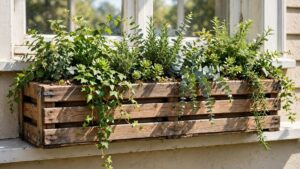
The Costway box is the plain timber option in this guide: a 36 inch fir wood box with a water-based paint surface, sold as an assembly-required kit. Fir is light for its size, and the wood reads as warm and traditional under a front window, which suits houses where fiberglass and resin look too smooth. At 36 inches it spans a large front window, and the rectangular trough shape plants a straight row of annuals or herbs without fuss. The water-based paint surface is the finish as listed, and it will need attention over time, as any outdoor wood does.
Assembly is required, so the buyer should expect a kit with panels and fixings rather than a finished box, and the assembly step is also the chance to check every joint before the box is filled. Wood is the highest-maintenance material in this guide, and it is also the most forgiving to repair: a loose board can be re-fixed, and a worn finish can be repainted. For a front window where the timber look matters and the owner is willing to maintain it, the Costway box is the simple, honest choice at 36 inches.
Pros:
- Natural fir wood with a traditional look
- 36 inch length spans a large window
- Light timber build
- Water-based paint surface
Cons:
- Assembly required
- Wood needs regular maintenance outdoors
- Drainage detail is not stated on the listing
Buying guide
Measure the glass before the box
A window box should span the window, not sit in the middle of it. Measure the width of the glass plus the trim, and choose a box that covers that width with a small margin at each end. A 36 inch box suits a window of about that width; a 48 inch box suits a wider window; and the 60 and 72 inch fiberglass lengths exist for windows that a single 48 inch box cannot span. Measure the sill depth too: the Panama box at 12 inches wide and 18 inches deep overhangs a narrow sill, while the 8 inch wide fiberglass boxes sit neatly on most sills. A box that overhangs its sill looks wrong and loads its brackets unevenly.
Depth decides the planting list
An 8 inch deep box holds trailing annuals, herbs and small perennials. An 11 inch box, like the Fairfield, holds more, including larger perennials. An 18 inch box, like the Panama, holds small shrubs and ornamental grasses. Buying a shallow box and then trying to grow shrubs in it is the commonest mistake with long window boxes, because the plants look fine for a season and then stall. Match the depth to the planting list first, and let the length follow the window. The reservoir in the Fairfield box is a separate advantage: it waters the middle of a long box as well as the ends.
Mounting is a structural job, not a decoration job
A long box full of wet soil is heavy, and its brackets must be fixed into solid framing, brick or masonry, never into trim or render alone. Cleat systems spread the load along the wall; bracket systems concentrate it at two or more points; keyhole mounts hang from screws that must be rated for the load. Check the wall before ordering, and if the wall is uncertain, choose the cleat-mounted fiberglass box or the Fairfield with its supplied brackets, and fix them with the right plugs and screws for the wall material. A box that pulls away from a wall damages the wall, the box and whatever sits below it.
Water a long box in sections
A long box dries unevenly: the ends near the wall dry slower, the middle in sun dries faster, and a single watering can at one end does not reach the other. Water slowly along the whole length, and check the middle with a finger before deciding the box is watered. Reservoir boxes reduce this chore, and deeper boxes hold moisture longer, but no long box waters itself evenly from one end. In hot spells, water in the morning so the soil is moist before the sun reaches the glass, and avoid wetting the foliage in the heat of the day.
Plan for the liner and the finish
Steel and hayrack boxes use coco liners with a life of about two to four seasons, and the liner should be inspected each spring before planting. Fiberglass and resin boxes need their paint and finish checked for chips, and wood boxes need their paint surface renewed when it starts to wear. A long box is harder to take down than a short one, so build the inspection into the spring planting routine: check the brackets, check the liner, check the finish, and then plant. A box that is maintained lasts for years; a box that is ignored fails at the bracket first.
FAQ
How long should a window box be for a large front window?
It should span the glass plus the trim, with a small margin at each end. For most large front windows that means 36 to 48 inches, and for the widest windows the fiberglass boxes here run to 60 and 72 inches. Measure the glass and the trim before ordering, and measure the sill depth as well, since a deep box overhangs a narrow sill. A box that is too short looks like an afterthought; a box that is too long overhangs the wall and loads its fixings unevenly.
Is fiberglass strong enough for a 60 or 72 inch box?
Yes, when the box is braced and mounted properly. The Hooks and Lattice box includes a knock-out centre brace on lengths of 36 inches and longer, which stops the front wall from bowing under wet soil, and the Planters Unlimited box uses a cleat mount that spreads the load along the wall. Both need fixings into solid framing. Fiberglass holds its shape under a soil load better than long timber, which is why it is the material for the longest runs in this guide.
How do I water a long window box evenly?
Water slowly along the whole length rather than pouring at one end, and check the middle with a finger before deciding the box is watered. The Fairfield box helps with its built-in 4 gallon reservoir, which feeds the soil from below, and the optional self-watering insert is listed for the Hooks and Lattice box. Deeper boxes hold moisture longer. In hot spells, water in the morning so the soil is moist before the sun reaches the glass.
Does fiberglass need painting or sealing over time?
The fiberglass boxes here are listed with automotive grade paint or a molded finish, and they hold color through sun and frost without annual painting. Chips should be touched up so water does not reach the fibers, and the boxes should be washed down each spring. Wood boxes need more: their paint surface should be renewed when it starts to wear, and resin boxes need little more than a wash. The maintenance difference is one reason fiberglass suits long runs.
Can a fiberglass window box stay up all winter?
Yes. The fiberglass boxes in this guide are listed as frost-resistant, and the resin Fairfield box is built for outdoor use through the seasons. The planting matters more than the box: tender annuals should come out before frost, and the soil should not be left waterlogged, since frozen wet soil expands. Steel and hayrack boxes should have their liners checked in spring, since a liner that has rotted over winter will not hold soil.
What plants suit a large front window box?
Trailing annuals, herbs and small perennials suit the 8 inch deep boxes. Larger perennials suit the 11 inch Fairfield box. Small shrubs and ornamental grasses need the 18 inch Panama box and its 28.9 gallon capacity. Choose plants that suit the aspect of the window as well: sun-loving plants for a south-facing front, shade-tolerant plants for a north-facing one. A long box plants a row, so mix upright plants at the back with trailers at the front for a full look.
Conclusion
A large front window needs a box that spans the glass, and the right one depends on length, depth and mounting rather than looks alone. The Mayne Fairfield 4 ft box leads for most windows, with a 48 inch span, a 4 gallon reservoir and brackets included. The fiberglass boxes cover the longest runs to 72 inches, with a centre brace or a cleat mount to carry the load. Panacea and Kinsman cover the steel-and-liner style, the Panama box adds the depth for shrubs, and the Costway fir box is the plain timber option. Measure the glass, fix the brackets into solid framing, and choose the depth that matches the planting list.
Write Your Review
No reviews yet. Be the first to share your experience!