
Key takeaways
- Compare the best plastic rain barrels under 100 for raised bed watering, with verified prices, spigot types, capacities and overflow designs from each page.
As an Amazon Associate I earn from qualifying purchases. This post may contain affiliate links at no extra cost to you.
Raised beds drink more than in-ground rows. Their soil sits above grade, drains freely on all sides and warms faster, so in a dry week a bed can need water every day — and hauling it from a distant tap in cans gets old fast. A rain barrel beside the beds solves the logistics: it harvests the roof, stores the water steps from the soil and hands it back through a spigot at watering time. The best plastic rain barrels under 100 for raised bed watering share a few traits that matter more than looks: a spigot that accepts a hose or fills a can quickly, an overflow that can be directed away from the bed's base, a screen that keeps debris and insects out of stored water, and a footprint that fits the narrow strip between a house wall and the first bed.
This roundup covers five barrels whose prices were verified inside the band on their opened product pages — the figures live in our sources file, not in the article. Two are rigid polyethylene barrels from RTS Home Accents, one with a plastic spigot and one with brass. The other three are collapsible designs from Gemplers, Curifurn and Laspeiraux that fold away for winter, a genuinely useful trait when the beds sit in a small yard where storage space competes with everything else.
Quick verdict
The RTS Home Accents 50-Gallon ECO is the default pick: rigid, flat-backed to sit tight against a wall, made from fully recycled plastic, with an overflow valve that lets you link a second barrel later. Step up within the band to the RTS model with the brass spigot if the barrel will feed a hose daily, since brass threads outlast plastic ones. If winter storage space is your binding constraint, the Gemplers Rainwater Bucket and the two 53-gallon collapsibles from Curifurn and Laspeiraux fold down to a fraction of their working size, and the Curifurn adds the most complete fitting kit of the three.
Comparison table
| Product | Key spec | Best for |
|---|---|---|
| RTS Home Accents 50-Gallon ECO Rain Barrel (551000300A8081) | 50 gal; 100% recycled polyethylene; flat back; plastic spigot | A rigid barrel that hugs the wall beside the beds |
| RTS Home Accents 50-Gallon Rain Barrel with Brass Spigot (55100009005681) | 50 gal; brass spigot; flat back; overflow valve | Daily hose hookups and long thread life |
| Gemplers Rainwater Bucket 50 Gal (238038) | 50 gal; collapsible PVC frame and fabric; 5.8 lb | Folding away for winter in small yards |
| Curifurn Collapsible Rain Barrel 53 Gal (RB002) | 53 gal; 1000D Oxford with triple PVC coating; spigot, filter and overflow kit | A collapsible with the fullest fitting kit |
| Laspeiraux Collapsible Rain Barrel 53 Gal | 53 gal; three-layer PVC; mesh top filter; spigots and overflow kit | Budget collapsible storage for seasonal beds |
How we chose
The band came first: every barrel's price was confirmed on its opened product page during research, and only barrels inside the under-100 band were eligible. Second, we judged fitness for raised beds specifically. A barrel for beds must deliver water at bed height — a low spigot that fills a watering can, or threads that take a short hose or soaker line — and it must manage overflow safely, because a barrel that dumps its surplus at its base will undermine the soil beside a bed. Third, we weighed inlet screening, since roof water carries grit and leaves that clog soaker hoses. Fourth, we weighed format: rigid barrels are set-and-forget but occupy their footprint all year, while collapsibles trade some sturdiness for winter storage in a fraction of the space. All five picks are plastic as the keyword requires — polyethylene for the rigid pair, PVC fabrics for the collapsibles — and none is under a recall.
RTS Home Accents 50-Gallon ECO Rain Barrel (551000300A8081)
- Capacity: 50 gallons
- Material: UV-resistant polyethylene, 100% recycled plastic
- Shape: flat back for placement against walls and fences
- Spigot: plastic spigot included
- Overflow: built-in overflow valve; barrels can be linked for more storage
- Origin: made in the USA
- Warranty: 1-year warranty listed
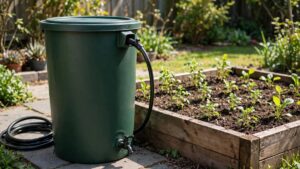
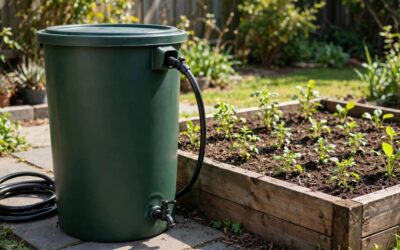
The ECO is the barrel most raised-bed gardeners should start with. Its flat back is the detail that matters in the tight geography of a kitchen garden: the barrel sits flush against the wall or fence at the end of the beds instead of eating a round barrel's worth of path. The maker builds it from fully recycled, UV-resistant polyethylene, so it shrugs off seasons of sun without going brittle, and the textured finish helps it disappear against siding. The spigot sits low for filling cans, and the overflow valve both manages surplus water in a storm and provides the connection point if you link a second barrel as your beds expand.
The plastic spigot is the honest weakness — plastic threads wear faster than brass under daily hose swaps — and the stand that raises the barrel for better gravity flow is sold separately. Neither flaw is hard to live with: leave a short hose attached, or fill cans. For a rigid, American-made barrel comfortably inside the band, the ECO sets the standard the rest of this list is measured against.
Pros:
- Flat back fits the narrow strip beside raised beds
- Fully recycled, UV-resistant polyethylene
- Overflow valve doubles as a linking point for a second barrel
Cons:
- Plastic spigot threads wear faster than brass
- Raising stand is sold separately
RTS Home Accents 50-Gallon Rain Barrel with Brass Spigot (55100009005681)
- Capacity: 50 gallons
- Material: UV-resistant polyethylene
- Shape: flat back for placement against walls and fences
- Spigot: brass spigot for secure, leak-resistant connections
- Overflow: built-in overflow valve; barrels can be linked
- Finish: walnut color, textured
- Origin: made in the USA
This is the ECO's sibling with the one upgrade that daily users feel: a brass spigot. If your raised-bed routine is to clip on a hose or soaker line every morning and unclip it every night, brass threads are the difference between a connection that stays tight for years and a plastic one that starts to weep. The rest of the formula matches the ECO — 50 gallons of UV-resistant polyethylene in a flat-back body that parks against the wall, an overflow valve that manages storm surplus and allows linking, and a textured walnut finish that reads more like garden furniture than a utility tank.
It sits at the very top of the band, so the brass fitting is effectively what the extra money buys over the ECO. Judge it by your watering style: can-fillers can save the difference, hose users should spend it. Like the ECO, it is made in the USA, and the optional stand remains a separate purchase if you want more gravity head for a soaker line.
Pros:
- Brass spigot threads suit daily hose connections
- Flat back and 50 gal capacity match bed-side placement
- Overflow valve allows linking a second barrel
Cons:
- Priced at the top of the band
- Stand for extra gravity head is sold separately
Gemplers Rainwater Bucket 50 Gal (238038)
- Capacity: 50 gallons
- Construction: PVC frame with corrosion-resistant PVC fabric
- Format: collapsible for off-season storage
- Dimensions: 23.6 x 23.6 x 27.5 in
- Weight: 5.8 lb
- Color: green
Gemplers sells to farms and grounds crews, and its Rainwater Bucket takes the collapsible idea seriously: a PVC frame wrapped in corrosion-resistant PVC fabric that holds 50 gallons in season and folds flat when the beds are done. At 5.8 pounds empty, one person can carry it to the shed, hang it on a wall and forget it until spring — a real advantage in the small yards where raised beds are most common, because a rigid barrel's footprint is occupied twelve months a year whether or not anything is growing.
The fabric format asks for sensible placement: a level surface, away from sharp edges and strimmer lines, and it will never feel as planted as a rigid barrel in a storm. The listing is light on fitting detail compared with the two collapsibles below, so expect a basic draw-off arrangement rather than a full kit. What you are buying is the Gemplers name behind a simple, light, genuinely storable 50 gallons.
Pros:
- Folds flat for winter storage in tight sheds
- Very light at 5.8 lb for one-person handling
- Farm-supplier brand with a simple, tough build
Cons:
- Fabric body needs a level, protected spot
- Listing details fewer fittings than rival collapsibles
Curifurn Collapsible Rain Barrel 53 Gal (RB002)
- Capacity: 53 gallons
- Material: 1000-denier Oxford fabric with triple-layer PVC coating
- Temperature range: minus 13°F to 113°F per the listing
- Fittings: faucet and outlet valve with rubber seals; overflow kit
- Inlet: top mesh grid for overflow protection and debris screening
- Frame: reinforced design with fiberglass legs
- Format: collapsible for storage and carrying
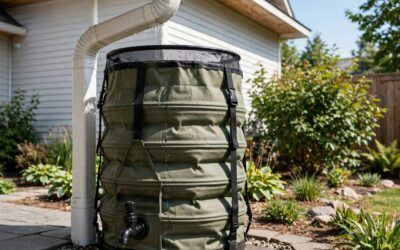
The Curifurn is the most fully specified collapsible here. The listing describes a 1000-denier Oxford shell with a triple-layer PVC coating, roughly twice the thickness of the previous model, sealed faucet and outlet fittings with rubber gaskets, and a top mesh grid that handles overflow while screening out leaves. Reinforced framing and fiberglass legs address the wobble that plagues cheap fabric barrels, and the stated temperature range covers both summer heat and a hard frost, though draining before a freeze remains the wise routine for any barrel.
At 53 gallons it matches the rigid pair's capacity while folding away in winter, and the included overflow kit means the surplus goes where you aim it rather than down the barrel's side beside your bed. Fabric barrels still ask for a level pad and a little distance from sharp tools, and the brand lacks the RTS track record. On fittings and fabric specification per dollar inside this band, though, it is the collapsible to beat.
Pros:
- Fullest fitting kit here: sealed faucet, outlet and overflow
- Heavy 1000D fabric with triple PVC coating
- Mesh top screens debris while managing overflow
Cons:
- Fabric format needs level, protected placement
- Shorter brand track record than RTS or Gemplers
Laspeiraux Collapsible Rain Barrel 53 Gal
- Capacity: 53 gallons
- Material: 1000D PVC fabric, three-layer construction
- Dimensions: about 60 cm diameter by 70 cm height
- Fittings: screw-in faucet; overflow kit
- Inlet: mesh top design screens leaves and debris
- Stability: circular footpads to reduce wobbling
- Format: foldable for storage and transport
The Laspeiraux covers the same ground as the Curifurn at a similar point in the band: 53 gallons of three-layer PVC fabric, a mesh top that filters incoming roof water and handles overflow, and a screw-in faucet designed to go together without a pile of separate parts. The listing emphasizes the integrated design — fewer joints means fewer leak paths — and circular footpads that steady the barrel on its pad. Water leaves through the faucet or the overflow kit, and when the season ends the whole thing folds down for a shelf or a tote.
Choose between this and the Curifurn on the details: the Curifurn publishes a heavier fabric specification and a wider stated temperature range, while the Laspeiraux leans on simplicity of assembly. Either gives a small-yard gardener 53 gallons beside the beds all summer and a cupboard shelf's worth of barrel all winter, which is the entire appeal of the format.
Pros:
- Integrated design with few leak-prone joints
- Mesh top filters debris and manages overflow
- Folds flat for off-season storage
Cons:
- Fabric specification is thinner on detail than the Curifurn
- Needs a level pad and care around sharp tools
Buying guide
Placement decides more than brand. Put the barrel where three things meet: a downspout you can divert, a level patch of ground, and the shortest possible walk to the beds. Flat-back rigid barrels earn their keep against a wall; collapsibles need a level pad just as much, because 50 gallons of water weighs over 400 pounds and a fabric wall on a slope will lean and stress its seams. Whatever the format, give the overflow somewhere deliberate to go — a hose to a drain, a gravel strip or a thirsty shrub — never a puddle at the base of the barrel or the foot of a raised bed, where surplus water undermines soil and timber.
Gravity is your pump, so height is pressure. A barrel on the ground fills a watering can happily but pushes a soaker hose weakly; raising any of these barrels on a sturdy stand or stacked blocks improves flow to bed level noticeably, which is why RTS sells a stand for its pair. Keep the assembly genuinely sturdy — a full barrel is heavy, and the stand must be level and braced, not improvised from loose bricks.
Match the spigot to your routine. If you fill cans, any spigot here works. If you connect a hose daily, the brass-spigot RTS is the one whose threads will still be crisp in five years; with plastic spigots, leave a short leader hose attached and handle the barrel's own thread as little as possible. For soaker lines along the beds, a low spigot and a raised barrel matter more than the fitting material.
Consider capacity against your roof and your beds together. A single inch of rain on 100 square feet of roof yields roughly 60 gallons, so even a modest roof section refills a 50-gallon barrel in one ordinary storm — the barrel size here is rarely the limit in a wet week. The limit arrives in a dry one, when the barrel is a buffer between storms rather than a supply in itself. If your beds regularly empty a barrel before the next rain, the linking valves on the RTS pair and the overflow ports on the collapsibles are the growth path: a second barrel chained to the first doubles storage without a second downspout, and two barrels bought inside this band still cost less than most single premium barrels. Site the pair side by side on the same level pad so they fill evenly.
Finally, plan the water itself. Roof water through a mesh screen is fine for raised beds of ornamentals and, by long gardening convention, for vegetables too, but keep the inlet screen clean so flow does not slow to a trickle, and drain and store collapsibles dry over winter while rigid barrels should be emptied, rinsed and left with the spigot open where hard freezes bite. A barrel that survives winter is a barrel that starts the spring full of the first rains, right when the beds are thirstiest.
FAQ
How much water does a raised bed actually need from a barrel?
As a working rule, beds want roughly an inch of water over their surface per watering in hot weather, which is about 0.6 gallons per square foot. A 4 by 8 foot bed therefore drinks close to 20 gallons per deep watering, so a 50-gallon barrel covers two beds generously or three beds at a lighter hand — one good reason the barrels here cluster at 50 gallons and up.
Can I run a soaker hose for my beds from one of these barrels?
Yes, with modest expectations. Gravity pressure from a ground-level barrel is low, so soaker lines run slowly and work best short and level; raising the barrel on a stand improves flow clearly. Keep the inlet screen clean, because grit that reaches the soaker line will clog its pores long before it bothers a watering can.
Rigid or collapsible — which suits a small yard with raised beds?
Rigid barrels are tougher, feel more permanent and are ready the moment it rains, but they hold their footprint all year. Collapsibles from Gemplers, Curifurn and Laspeiraux fold to a fraction of their size for winter, which in a small yard can be the deciding factor. If you have a permanent corner beside the beds, go rigid; if storage is your scarcest resource, go collapsible.
Where should the overflow go?
Aim it somewhere that wants water or drains freely — a gravel strip, a drain, or a bed of thirsty perennials — using the overflow valve or kit the barrel provides. Never let overflow spill at the barrel's base: beside raised beds it will soften the soil under the bed's frame and shorten the timber's life.
Do I need a diverter in the downspout?
A diverter makes filling cleaner and lets you send winter flow back down the drain, but a barrel placed under a cut downspout with a screened inlet works too, and all five barrels here screen their inlets in some form. Whichever route you take, the overflow path matters more than the inlet hardware, because a barrel in a storm fills faster than most people expect.
How do I winterize a plastic rain barrel?
Drain it fully, rinse out sediment, and leave rigid barrels with the spigot open so any residual water can expand without cracking the body; many owners tip rigid barrels or store them upside down. Collapsibles should be dried, folded and stored under cover. Disconnect hoses and diverters so ice cannot split the fittings.
Conclusion
For raised bed watering inside this band, the choice is really about format. The RTS Home Accents ECO is the rigid barrel to start with — flat-backed, recycled, linkable — and its brass-spigot sibling is worth the small step up if a hose comes on and off daily. Where winter storage rules the decision, the Gemplers Rainwater Bucket brings a farm supplier's simplicity, while the Curifurn and Laspeiraux collapsibles pack 53 gallons, screened inlets and overflow kits into fabric bodies that fold away to almost nothing. Set any of them on a level pad beside the beds, give the overflow a deliberate destination, raise the barrel if a soaker line is in your plans, and the roof will do your watering-can runs for you.

Write Your Review
No reviews yet. Be the first to share your experience!