
Key takeaways
- Self-watering window boxes sized for small townhouse windows, with reservoir capacities, liner systems and bracket notes to match narrow sills and facades.
As an Amazon Associate I earn from qualifying purchases. This post may contain affiliate links at no extra cost to you.
Our top picks at a glance
5 products from this guide, in the order reviewed below.


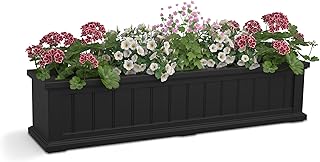

As an Amazon Associate we earn from qualifying purchases. Prices and availability can change.
A townhouse window is a small stage with strict limits. The sill is narrow, the facade may be brick, render or stone you would rather not drill, the neighbours are close, and the box has to look tidy from the street while staying within reach of an open window for watering. Add a reservoir and the routine changes: instead of leaning out daily with a can, you fill a tank and let the planting draw what it needs for days at a time. That is the appeal behind best self watering window boxes for small townhouse windows, and it is also where the differences between models actually matter.
Reservoir size, planting depth and the way a box mounts decide whether it suits a compact townhouse frontage. A long box with a generous tank suits a wide sash that can take the filled weight on proper brackets, while a short box with a modest reservoir and a removable liner suits a narrow window where everything, including the gardener, works in a small space. This guide works from the street inward: measure the window, respect the facade, then choose the reservoir that matches how often you realistically want to refill it.
Quick verdict
The Lechuza Balconera Stone 50 leads for a genuinely small window: a short box, a one-gallon reservoir and a removable liner you can plant at the kitchen table. Step up to the Stone 80 or Cottage 80 for a wider sash and a larger tank, choose the Mayne Cape Cod 48 or Fairfield 4 ft where a traditional townhouse profile matters and brackets are included, consider the Laguna 48 where a fibreglass run suits the facade, and keep the Elongated box as the compact shape for the narrowest ledges of all.
| Product | Key spec | Best for |
|---|---|---|
| Lechuza Balconera Stone 50 Self-Watering Window Box | 19.7 x 7.5 x 7.5 in; reservoir 1 liq gal; planting volume 2 dry gal | The short box for a single narrow sash window |
| Lechuza Balconera Stone 80 Self-Watering Window Box | 31.1 x 7.5 x 7.5 in; reservoir 1.5 liq gal; planting volume 3 dry gal | A wider sash with a larger tank and two liners |
| Lechuza Balconera Cottage 80 Self-Watering Window Box | 31 x 7.5 x 7.5 in; reservoir 1.5 gal; planting volume 3 dry gal | The woven-look option for a cottage-style frontage |
| Mayne Cape Cod Window Box 48 in 4841-W | 48 x 11 x 11 in outer; reservoir 4 gal; soil 10 gal | The traditional profile with the biggest tank here |
| Mayne Fairfield Window Box 4 ft (5823-W) | 48 x 11 x 11 in; reservoir 4 gal; polyethylene | A four-foot box with brackets and a long warranty |
| Hooks and Lattice Laguna Fiberglass Window Box 48 Inch | 48 in; 8.875 in W x 8 in H; fibreglass; channel mount | A fibreglass run for a facade that needs an exact fit |
| Elongated Self Watering Window Box | 16 x 5.5 x 5.5 in; 1 quart capacity; reservoir for a week or more per roundup page | The compact box for the narrowest ledges |
How we chose
Only boxes with a stated reservoir or sub-irrigation system were kept, and the reservoir figure had to come from the maker or retailer page rather than from a headline. Planting depth and volume were recorded where the page states them, because a deep tank under a shallow planting layer behaves very differently from a shallow tank under deep soil. Mounting mattered too: boxes that include steel brackets earned attention for townhouse use, since the fixing is half the installation on a facade. Lengths were deliberately mixed, from a short box for a single narrow sash to four-foot boxes for a wide front window, so the list maps onto real townhouse frontages.
Lechuza Balconera Stone 50 Self-Watering Window Box
- Length: 19.7 in; width and height 7.5 x 7.5 in
- Planting depth: 4.5 in
- Planting volume: 2 dry gal
- Reservoir: 1 liq gal
- Liner: one removable liner, 18.5 in
- Extras: water level indicator; removable outdoor drainage screw
Short boxes are where townhouse planting usually starts, and this one is designed rather than merely cut down. The maker page gives a full set of working numbers: a one-gallon reservoir under a four-and-a-half-inch planting layer, a two-gallon planting volume, and a single removable liner that lifts out so you can plant the whole box indoors and carry it to the window finished. The water level indicator removes the guesswork that defeats most reservoir systems, and the removable drainage screw lets rain escape outdoors instead of filling the planting layer. For herbs outside a kitchen window, this is the most complete small package here.
Ownership, rather than first impressions, is where this choice makes its case. The routine around it is short: a periodic check of the parts that move, wear or collect debris, a clean at the turn of the season, and storage or protection that follows the maker's plain guidance. None of that is demanding, but all of it is easier when you start with a model whose specifications were stated clearly enough to plan around. That clarity, as much as any single figure in the table, is why this model belongs on a shortlist built from product pages rather than from advertising lines.
Pros:
- Full specification set stated by the maker
- Removable liner makes planting easy
- Drainage screw suits outdoor use
Cons: - Short length limits the planting display
- Wall or railing brackets are a separate choice
Lechuza Balconera Stone 80 Self-Watering Window Box
- Length: 31.1 in; width and height 7.5 x 7.5 in
- Planting depth: 4.5 in
- Planting volume: 3 dry gal
- Reservoir: 1.5 liq gal
- Liners: two removable liners
- Extras: water level indicator; removable outdoor drainage screw
The Stone 80 stretches the same system across a wider window. Two removable liners mean you can plant each half separately, swap one side without disturbing the other, and carry the box to the window in manageable pieces. The reservoir grows to one and a half gallons, which stretches the interval between fillings on a box that also holds more plants. The planting depth stays at four and a half inches, so this remains a box for herbs, flowers and salads rather than deep-rooted planting. On a townhouse, the stone-effect finish reads calmly against brick, render and painted masonry alike, and the length suits a standard double sash without crowding the frame.
In day-to-day use, the detail that decides satisfaction is rarely the headline figure. It is whether the size fits the space you measured, whether the routine it asks for matches the time you actually have, and whether the parts you touch every week feel soundly made. Judged that way, this option earns its place by being predictable: you set it up once, learn its habits in the first fortnight, and then it asks for little beyond the normal care its category always needs. Keep the maker's stated limits in view, work within them rather than at their edge, and the result is a piece of kit that stays useful season after season without becoming a project in its own right.
Pros:
- Two liners make planting and swapping easy
- Larger reservoir for a wider box
- Calm stone-effect finish suits facades
Cons: - Needs a sound bracket for the filled weight
- Planting depth still suits compact plants only
Lechuza Balconera Cottage 80 Self-Watering Window Box
- Size: 31 x 7.5 x 7.5 in
- Planting depth: 4.5 in
- Planting volume: 3 dry gal
- Reservoir: 1.5 gal
- Liners: two removable liners, 14.5 in each
- Extras: water level indicator; substrate included per maker page; wicker-look finish
Where the Stone models are plain, the Cottage 80 wears a wicker-look finish that suits a softer, cottage-style townhouse frontage and older brick. Underneath, the working parts match its stablemate: a one-and-a-half-gallon reservoir, two removable liners and a water level indicator, with the maker's substrate included in the system. That matters because the reservoir design assumes the correct layer between water and compost. Choose this one when the look of the box is part of the decision, as it often is on a street-facing window, but buy it for the same sound reasons: stated volumes, a liner system you can plant at a table, and a reservoir sized to the length.
There is also a practical question of fit with the rest of the garden. This option plays well alongside simpler pieces because its role is clear and its footprint is honest, so it does not force compromises elsewhere. Set it up on a level, well-chosen spot, give it the clearances its page implies, and resist the urge to push it beyond the job described here. Gardeners who match a product to one clear job, and let it do that job well, almost always end up happier than those who buy on a headline and then improvise around the gaps for the rest of the season.
Pros:
- Wicker-look finish suits older frontages
- Two liners and a level indicator included
- Substrate included with the system
Cons: - Finish is a look, not real wicker
- Brackets are a separate purchase
Mayne Cape Cod Window Box 48 in 4841-W
- Outer size: 48 x 11 x 11 in
- Inner size: 45 x 7.5 x 8 in
- Weight: 20 lb
- Soil capacity: 10 gal
- Reservoir: 4 gal
- Brackets: steel wall mount brackets included; overflow drainage
Four feet is a wide townhouse window, and this Mayne box is built for exactly that frontage. The numbers are generous: a four-gallon reservoir, ten gallons of soil capacity and an inner depth of eight inches, which opens the planting list to fuller flowers and herbs that want more root room. The double-walled polyethylene body keeps its classic panelled profile, and steel brackets are included, which removes the most awkward part of a long-box installation. The trade is weight and commitment: at twenty pounds empty and far more filled, this box needs sound fixings into sound wall, and it is a fixture rather than a seasonal accessory. For a principal front window, that commitment is the point.
Ownership, rather than first impressions, is where this choice makes its case. The routine around it is short: a periodic check of the parts that move, wear or collect debris, a clean at the turn of the season, and storage or protection that follows the maker's plain guidance. None of that is demanding, but all of it is easier when you start with a model whose specifications were stated clearly enough to plan around. That clarity, as much as any single figure in the table, is why this model belongs on a shortlist built from product pages rather than from advertising lines.
Pros:
- Largest reservoir and soil capacity here
- Steel brackets included in the box
- Deep inner planting space
Cons: - Needs sound fixings for a heavy filled box
- Too long for a genuinely narrow window
Mayne Fairfield Window Box 4 ft (5823-W)
- Size: 48 x 11 x 11 in
- Material: high-grade polyethylene resin
- Reservoir: 4 gal built in
- Brackets: powder-coated steel wall mount brackets included
- Warranty: 15-year residential warranty, per the listing
- Weight: lightweight for its size, per the listing
The Fairfield offers the same four-foot, four-gallon formula as the Cape Cod in a cleaner, plainer profile that suits rendered and painted townhouse fronts where panelled detail would fight the architecture. Brackets are included and powder-coated, the resin body carries a long residential warranty on the listing, and the built-in reservoir keeps the watering rhythm slow. As with any four-foot box, the decision is really about the wall: measure the window, confirm the fixing material, and plan the fill in place rather than trying to lift a planted box of this length. Chosen for the main window of a house, it gives the most planting and the longest refill interval on this list.
In day-to-day use, the detail that decides satisfaction is rarely the headline figure. It is whether the size fits the space you measured, whether the routine it asks for matches the time you actually have, and whether the parts you touch every week feel soundly made. Judged that way, this option earns its place by being predictable: you set it up once, learn its habits in the first fortnight, and then it asks for little beyond the normal care its category always needs. Keep the maker's stated limits in view, work within them rather than at their edge, and the result is a piece of kit that stays useful season after season without becoming a project in its own right.
Pros:
- Four-gallon reservoir and included brackets
- Plain profile suits rendered facades
- Long residential warranty on the listing
Cons: - Long and heavy once filled
- Plain look will not suit every frontage
Hooks and Lattice Laguna Fiberglass Window Box 48 Inch
- Length: 48 in from the standard size list
- Section: 8.875 in W x 8 in H
- Material: handmade fibreglass
- Mounting: integrated channel; stainless steel wall brackets
- Reservoir: optional self-watering system
- Sizes: range runs 24 to 72 in
Fibreglass earns its place on a townhouse because it holds a crisp line, shrugs off weather and can be ordered in a run of lengths from two to six feet, so the box can match the window rather than the other way round. The Laguna mounts on an integrated channel with stainless brackets, and the self-watering system is an optional insert, which lets you add the reservoir to the exact length you choose. That option does need confirming at order time, and the filled weight of a four-foot fibreglass box still demands sound fixings. For a frontage where standard sizes fall awkwardly between two windows, this made-to-measure route is the tidy answer.
There is also a practical question of fit with the rest of the garden. This option plays well alongside simpler pieces because its role is clear and its footprint is honest, so it does not force compromises elsewhere. Set it up on a level, well-chosen spot, give it the clearances its page implies, and resist the urge to push it beyond the job described here. Gardeners who match a product to one clear job, and let it do that job well, almost always end up happier than those who buy on a headline and then improvise around the gaps for the rest of the season.
Pros:
- Wide size range matches awkward windows
- Crisp fibreglass line suits smart facades
- Stainless brackets and channel mounting
Cons: - Reservoir is an optional extra to specify
- Long lengths need careful fixing
Elongated Self Watering Window Box
- Size: 16 x 5.5 x 5.5 in
- Capacity: 1 quart
- Reservoir: self-watering store, a week or more per the roundup page
- Extras: water level indicator and fill port
- Material: white plastic
- Weight: 16 oz, per the roundup page
At sixteen inches long and under six inches in each other dimension, this is the box for the window that every other entry on the list would overwhelm: a narrow bathroom sash, a small kitchen window over a sink, a slim ledge on a mews frontage. The roundup page credits its reservoir with a week or more between fillings and notes a level indicator and fill port, which is the right feature set at this size because a small box is usually in an awkward reach. Capacity is honestly tiny, so plant it as an accent: a few herbs, a short run of trailing flowers, a line of spring bulbs. Within that modest job, it is the easiest box here to mount, fill and live with.
Ownership, rather than first impressions, is where this choice makes its case. The routine around it is short: a periodic check of the parts that move, wear or collect debris, a clean at the turn of the season, and storage or protection that follows the maker's plain guidance. None of that is demanding, but all of it is easier when you start with a model whose specifications were stated clearly enough to plan around. That clarity, as much as any single figure in the table, is why this model belongs on a shortlist built from product pages rather than from advertising lines.
Pros:
- Smallest and lightest box on the list
- Indicator and fill port at a compact size
- Suits windows no other pick fits
Cons: - One-quart capacity limits planting
- Plastic build is plain in appearance
Buying guide
Measure the window, then the wall
Start with the outside width of the frame and the depth of the sill, then look at the wall below it. A box should sit a little inside the frame width so it reads as part of the window, and its brackets need sound material to fix into. On a townhouse, also look sideways: a box that overhangs a neighbour's line or drips onto their step will cause friction no planting scheme is worth. Keep the filled weight in mind throughout, because a four-foot box full of wet compost and water is a serious load for any bracket, however sturdy it looks in a photograph.
How the reservoir really helps
A reservoir does not water the plants for you; it stores water below the roots and lets capillary action draw it up as the compost dries. The practical gain is rhythm: fewer, larger fillings instead of daily splashes, and more even moisture between them. A water level indicator turns guesswork into a glance, and an overflow route matters outdoors so rain tops the tank up without flooding the roots. In a heatwave even a large reservoir empties in days, so learn your box's pace in the first fortnight and refill on its schedule, not on hope.
Planting a small box well
Small volumes suit compact planting: herbs, trailing flowers, salads and bulbs in season. Use the removable liner, where one is supplied, to plant on a table at a comfortable height, then lift the finished planting into the box. Leave the maker's substrate layer in place where the system calls for it, since the reservoir design assumes that layer is there. Crowding is the common small-box error; plants in a narrow trough compete for the same water, so space them as the depth and volume figures suggest rather than as the nursery tray allows.
Facades, drips and winter
A townhouse box lives against a wall, often your own. Overflow and drainage should fall clear of the facade, not streak down it, so check where the overflow sits once the box is level. In winter a full reservoir can freeze; follow the maker's guidance on the drainage screw or plug where one is fitted, and expect to empty or protect boxes in a hard frost. A box that lifts off its brackets easily is a genuine advantage, letting you store it, clean the wall behind it, and replant without working off a ladder.
FAQ
How long does a reservoir last between fillings?
It depends on the tank size, the weather and the planting. The pages for these boxes state reservoirs from about one gallon on the short models to around four gallons on the longest Mayne boxes. In mild weather a full tank can carry a box for many days; in a hot, windy spell the same tank may last only a few. The water level indicator, where fitted, is the honest answer, so check it rather than a calendar.
Can I mount a box without drilling the facade?
Some boxes can hang from a railing or sit on a deep sill, and bracket styles vary by maker. Most of the larger boxes here include or expect steel wall brackets, which do need sound fixings. If drilling is not allowed, choose a shorter, lighter box, use a railing or sill mount rated for the filled weight, and confirm the arrangement on the product page before ordering anything.
Do roots sit in water in a self-watering box?
No, not by design. The reservoir sits below a separator or below the planting layer, and roots draw moisture upward as they need it. The planting depth figures on these pages, often around four and a half inches on the Lechuza models, describe the layer above that store. Problems start when the overflow is blocked and rain fills the whole box, which is why the overflow route should stay clear through the season.
Which box suits the narrowest townhouse window?
The shortest boxes on the list: the Balconera Stone 50 at under twenty inches and the Elongated box at sixteen inches. Both keep the filled weight modest and the planting area honest for a single narrow sash. Measure your frame first; a box a little narrower than the window always looks better and mounts more safely than one forced right to the edges of the frame.
What should I plant in a townhouse window box?
Choose plants that match the depth and the aspect. Herbs and trailing flowers suit sunny sills, while leafy salads and shade-tolerant flowers suit a frontage that sees little direct sun. Keep taller plants out of the middle of a small box where they shade everything else, and repeat one or two varieties along the box for a tidy, street-facing look that reads well from a distance.
Conclusion
For a small townhouse window, the winning box is the one whose length respects the frame, whose reservoir matches your routine and whose brackets suit your wall. The Stone 50 covers the narrowest sashes with the least fuss, the longer Lechuza and Mayne boxes reward a wider frontage with bigger tanks and included fixings, and the Laguna and Elongated options fill the longer-run and compact ends. Measure first, mount soundly, and the reservoir will do the quiet daily work for you.
Related guides
More from Amazon
Programs that pair well with the guide above. Offers and eligibility are set by Amazon and may change.
Collect the home and kitchen items you want in one registry that guests can shop from.
Create a wedding registrySet up recurring deliveries of everyday items on eligible products. Terms and savings are set by Amazon.
Explore Subscribe & SaveFree shipping on eligible items, Prime Video and more. Eligible new members can start with a free trial.
Start a Prime free trialAudiobooks and podcasts to listen to on the go. Eligible new members can start with a free trial.
Try Audible freeAs an Amazon Associate we earn from qualifying purchases.
More ways to save on your garden
Programs that pair well with the guide above. Offers and eligibility are set by Amazon and may change.
Fast, free shipping on eligible items, plus Prime Video and more. Eligible new members can start with a free trial.
Start a Prime free trialSet up recurring deliveries of everyday items on eligible products. Terms and savings are set by Amazon.
Explore Subscribe & SaveRead from a huge library of eBooks, including how-to guides and cookbooks. Eligible new members can start with a free trial.
Try Kindle UnlimitedAudiobooks and podcasts for the commute, the garage or the kitchen. Eligible new members can start with a free trial.
Try Audible freeAs an Amazon Associate we earn from qualifying purchases. Using these links costs you nothing extra.





Write Your Review
No reviews yet. Be the first to share your experience!